There is something fundamentally different happening north of the border, and it deserves our attention.
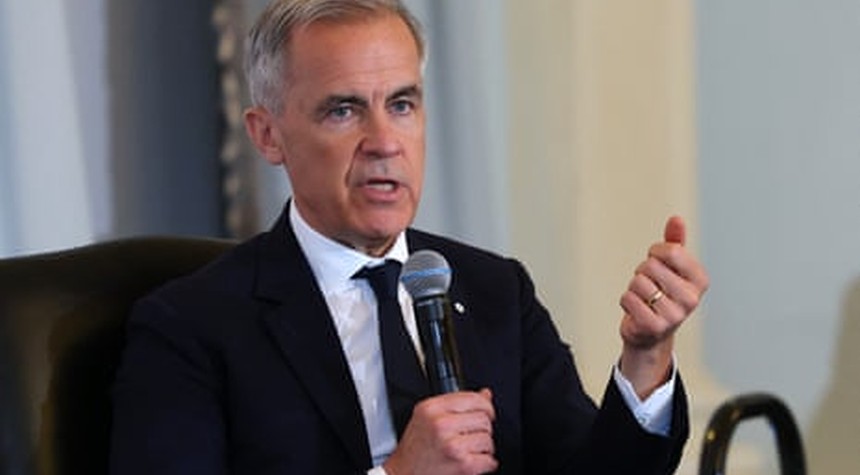
Canadian Prime Minister Mark Carney stood before an audience in New York this week and delivered a message that was equal parts olive branch and declaration of independence. He spoke of partnership with the United States while simultaneously making clear that Canada is charting a course toward what he calls “strategic autonomy.”
The timing is no accident. The United States-Mexico-Canada Agreement faces its mandatory review in July, and Carney is positioning his country for what could be contentious negotiations. His pitch was straightforward: Canada wants to help America remain competitive on the global stage, but it will no longer put all its eggs in the American basket.
“Canada strong will help make America great again,” Carney said, invoking familiar rhetoric while outlining a vision that suggests Canada intends to be a partner, not a dependent.
The numbers he presented are worth examining closely. Canada supplies 99 percent of American natural gas imports, 85 percent of electricity imports, and 60 percent of crude oil imports. Canadian aluminum exports to the United States represent the energy equivalent of ten Hoover dams. Canada purchases more American goods than China, Japan, and Germany combined.
These are not trivial statistics. They represent deep economic integration that has developed over decades. Carney argued that this integration makes sense and should be strengthened, particularly in sectors like automobile manufacturing, where North American cooperation provides the best defense against intense global competition.
Yet even as he made his case for partnership, Carney was frank about Canada’s broader strategy. His country is actively diversifying its trade relationships, signing deals with dozens of nations around the world. His stated goal is to double Canada’s non-US exports within the next decade.
The reason, he explained, is simple: “We live in a world where integration has been weaponized. A country that cannot feed, fuel or defend itself is not truly sovereign.”
This is the language of a nation reassessing its position in a changing world order. Carney has emerged as something of a spokesman for countries seeking to reduce their dependence on American markets while the current administration pursues an aggressive tariff strategy.
The tariffs have hit hard. While the USMCA has provided some protection, key Canadian sectors like aluminum and steel have been significantly affected. Carney suggested that American tariffs are creating a chill in investment that hurts both nations.
His proposals focused on areas where cooperation makes practical sense. On critical minerals, Canada possesses vast reserves of potash, nickel, copper, and uranium that America needs for everything from agriculture to national defense to powering artificial intelligence infrastructure. On energy, Canada provides reliable power at a time of global uncertainty.
The question Carney posed was pointed: “With America’s growing energy needs, does it make sense to build the gigawatts needed to replace Canada?”
It is a fair question, and one that deserves serious consideration as both nations prepare for July’s review of their trade agreement. The challenge for American policymakers will be determining whether Carney’s vision of partnership aligns with American interests, or whether his pursuit of strategic autonomy signals a more fundamental shift in the relationship between these two neighbors.
What is clear is that Canada is no longer willing to simply accept whatever terms are offered. Carney has read the political moment correctly in his own country, and he is negotiating from a position he believes is strong. How America responds will shape North American trade for years to come.
Related: Supreme Court Justice Amy Coney Barrett Targeted in Swatting Incident at Virginia Home