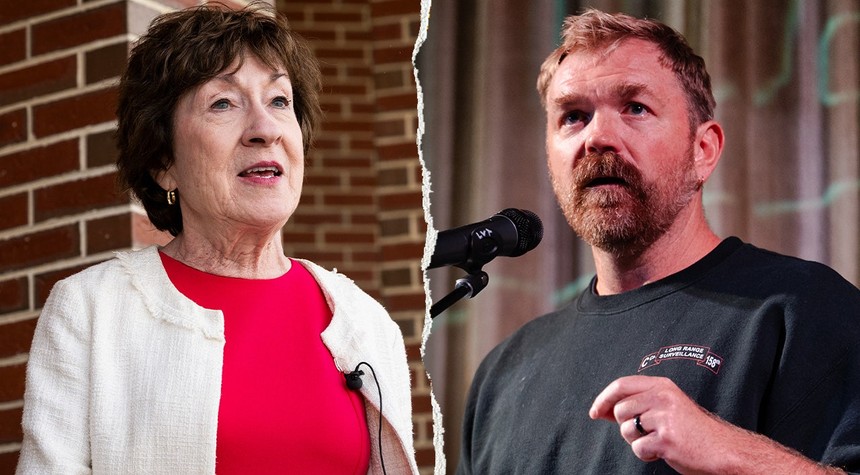
There are moments in politics when silence speaks volumes, and what we are witnessing from Senator Susan Collins tells us plenty about the delicate dance happening in Maine as voters prepare to make their voices heard.
The Republican senator has made it abundantly clear she wants no part of the escalating controversy surrounding Graham Platner, the Democratic frontrunner widely expected to challenge her in November’s general election. When pressed repeatedly last week about allegations of a sexting scandal involving her presumed opponent, Collins offered the same terse response: “I really have nothing to add to it.”
That is not a casual brush-off. That is a calculated political decision.
Collins maintained this position even as reporters gave her multiple opportunities to weigh in on the matter ahead of Tuesday’s Democratic primary. “As I said to you earlier, I do not have anything to add to this,” she reiterated when questioned again.
Now, here is where things get interesting. This studied neutrality from Collins represents a notable shift in her approach to Platner. Just last month, the Maine senator did not hesitate to condemn the Democratic candidate when he mocked a wounded American soldier. Her words then were clear and forceful: “It’s never appropriate to mock a downed American soldier. It’s just appalling.”
So what changed between then and now? The answer likely lies in the political calendar and the nature of Democratic primary politics.
While Collins herself remains tight-lipped, the broader Republican apparatus has shown no such restraint. Outside organizations supporting her reelection have launched advertising campaigns and amplified criticism of Platner’s controversies, doing the heavy lifting while the senator maintains what appears to be a strategic distance from the fray.
This approach carries a certain political logic. Why insert herself directly into a Democratic primary fight when surrogates can handle the attacks? Why give Platner’s Democratic opponents ammunition by appearing to meddle in their nomination process? And perhaps most importantly, why risk appearing overly focused on a candidate who has not yet secured his party’s nomination?
The contrast between Collins’ current silence and her previous willingness to criticize Platner reveals the careful calculations that define modern campaign strategy. There is a time to speak and a time to let others do the talking.
Even some of Platner’s own supporters have struggled to defend his conduct. One prominent backer described the candidate’s past relationships as “toxic” while arguing he deserves “redemption.” That kind of qualified support from one’s own corner rarely signals strength.
As Maine voters head to the polls for the Democratic primary, Collins appears content to watch from the sidelines while her potential opponent navigates turbulent waters largely of his own making. Whether this strategy of studied silence proves wise will depend largely on who emerges from Tuesday’s primary and how much damage the controversy has inflicted.
In politics, as in life, sometimes the most powerful statement is the one left unsaid. Senator Collins seems to be banking on exactly that principle as November approaches.
Related: Lauren Boebert Confronts Reporter Over Questions About Thomas Massie Allegations