
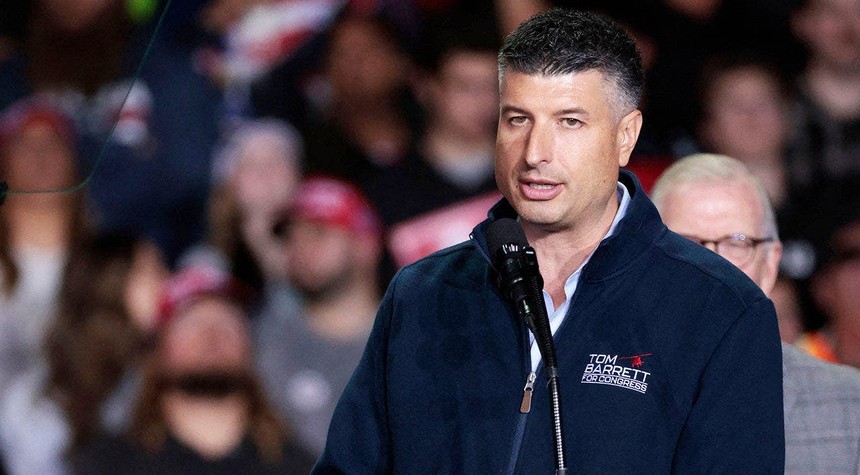
Courage, as they say, sometimes means standing up even when your own team is calling the plays. And that is exactly what one Republican congressman from Michigan is doing as tensions with Iran continue to simmer.
Representative Tom Barrett, a Republican who knows something about the cost of war from his multiple tours in the Middle East, has introduced a resolution that walks a careful line between supporting military action against Iran and preventing another generational quagmire in the Middle East. The measure, introduced Thursday, would authorize military operations through the end of July but with guardrails that would make any Pentagon planner take notice.
Barrett’s proposal would permit operations to degrade Iran’s nuclear program, address imminent threats, enforce a naval blockade, and ensure American ships can safely navigate the Strait of Hormuz. Those are hardly the positions of someone opposed to defending American interests. But here is where it gets interesting: the resolution would strictly prohibit boots on the ground for extended periods, ban nation-building efforts, and prevent any occupation or seizure of Iranian territory.
“Two things have been clear from the very beginning: Iran cannot be allowed to develop a nuclear weapon and the United States of America cannot be dragged into another endless war,” Barrett stated. As an Army veteran who has attended too many funerals, his words carry weight that no amount of think-tank analysis can match.
The congressman is exercising what he sees as Congress’s constitutional duty to define military missions with clear safeguards and deadlines, even as the Trump administration maintains that hostilities have effectively ended. This puts Barrett in an uncomfortable position politically, facing a tough re-election fight while breaking with his party’s administration on a matter of war powers.
Meanwhile, former Deputy National Security Advisor KT McFarland has been analyzing the broader diplomatic picture. She points to Iran’s documented history of failing to comply with international agreements and stresses that any nuclear deal must include what are known as “snap inspections” to have any credibility whatsoever. The devil, as always, is in the details and the enforcement.
McFarland also highlights a factor that often gets lost in the Washington debate: China’s vital interest in Iranian oil. Beijing has been engaged in diplomatic efforts ahead of the anticipated Trump-Xi summit, and anyone who thinks China will sit on the sidelines while Iran’s future is decided is not paying attention to how the world actually works.
Senator Lisa Murkowski of Alaska has indicated she will introduce similar legislation in the Senate, describing it as a necessary “restraint” on executive authority. The Alaska Republican’s involvement suggests this is not merely one backbencher making noise but potentially a broader concern among lawmakers about the scope and duration of military commitments.
Barrett framed his resolution in terms that should resonate across party lines: “If we don’t learn from our foreign policy failures of the past, we are bound to repeat them.”
The question now is whether Congress will reclaim its constitutional role in authorizing military force or continue to defer to executive authority as it has for decades. The answer may well determine not just the course of events with Iran, but the balance of power in Washington for years to come.
Related: Louisiana Lawmakers Expand Murder Statute After Deadly Baton Rouge Mall Shooting