California Republican Congressman Abandons Party, Shrinks GOP Majority Further
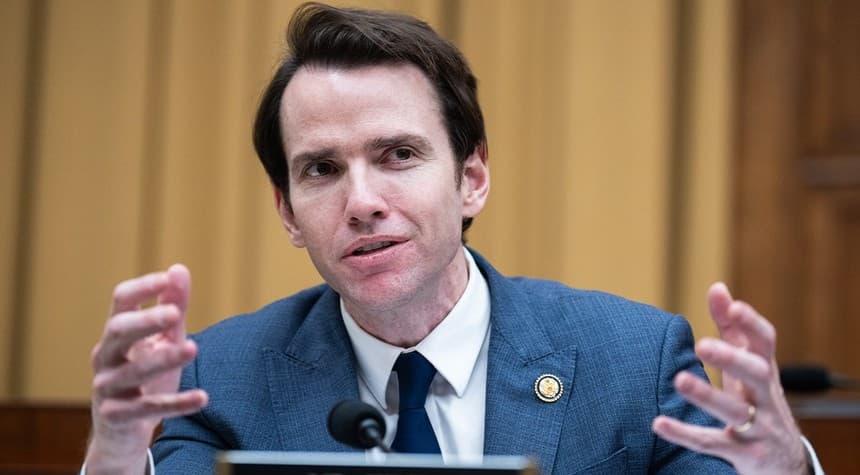
The arithmetic in the House of Representatives just got more complicated for Republicans, and that is putting it mildly.
Representative Kevin Kiley of California has officially left the Republican Party, effective immediately, to become an Independent. His office confirmed the switch on Monday, and the move cuts into an already perilously thin GOP majority that has been hanging by a thread since the current Congress convened.
For those keeping score at home, House Republicans now hold a majority of exactly one vote. That margin is expected to expand to two votes following a special election this week in a solidly Republican district in Georgia, but even that provides precious little room for error when it comes to passing legislation or surviving procedural votes.
Kiley, who represents a district in deep-blue California, had previously announced his intention to run as an Independent candidate in the November midterm elections. His district leans Democratic, and the decision to rebrand himself politically was likely calculated with electoral survival in mind. What was not expected, however, was his decision to make the switch now rather than waiting until after the election.
"This last week, we registered under no party preference in California," Kiley told local reporters, according to a recording that has since been reviewed. "I am also today asking the clerk of the U.S. House of Representatives to have that reflected in the official roster, so I will be the sole Independent member of the House of Representatives."
The timing of this departure raises questions that deserve answers. House Republicans are already navigating treacherous political waters with their narrow majority. Every vote counts, and every defection matters. While Kiley may continue to vote with Republicans on certain issues, his departure from the party removes any obligation to do so and eliminates whatever leverage leadership might have had over his decisions.
This development comes at a particularly sensitive moment for the GOP. The party has struggled to maintain unity on key legislative priorities, and internal divisions have occasionally spilled into public view. A one-vote majority means that any single member can effectively hold the entire conference hostage on any given issue. Now, with Kiley officially outside the tent, that dynamic becomes even more unpredictable.
California has long been a challenging environment for Republican politicians. The state has moved steadily leftward over the past two decades, and Republicans have found themselves increasingly marginalized in statewide politics. Kiley's decision to distance himself from the party label may be a pragmatic recognition of political reality in his district, but it nonetheless represents another data point in the GOP's ongoing struggle to remain competitive in America's most populous state.
The immediate practical effect of Kiley's switch is clear enough. House Speaker Mike Johnson and his leadership team now have even less margin for error as they attempt to advance their legislative agenda. The long-term implications, however, remain to be seen. Will other Republicans in difficult districts follow Kiley's lead? Does this signal a broader fracturing within the party?
Those are questions that will be answered in the months ahead, but for now, the numbers tell the story. The Republican majority just got smaller, and governing just got harder.
Related: President Threatens to Block All Bills Until Senate Passes Voter ID Requirements