Democrats Demand Immigration Reforms While DHS Funding Hangs in Balance
The standoff over Department of Homeland Security funding has reached a critical juncture, with both sides dug in deeper than a tick on a hound dog and the clock ticking toward a potential shutdown of critical federal operations.
The White House delivered a counterproposal to congressional Democrats on Monday, though the details remain closely guarded. What we do know is this: Democrats have put forward ten specific demands for reforming federal immigration enforcement, and they are insisting these conditions must be met before they will approve funding for the agency. It is the kind of high-stakes political poker that Washington plays all too well, with American security hanging in the balance.
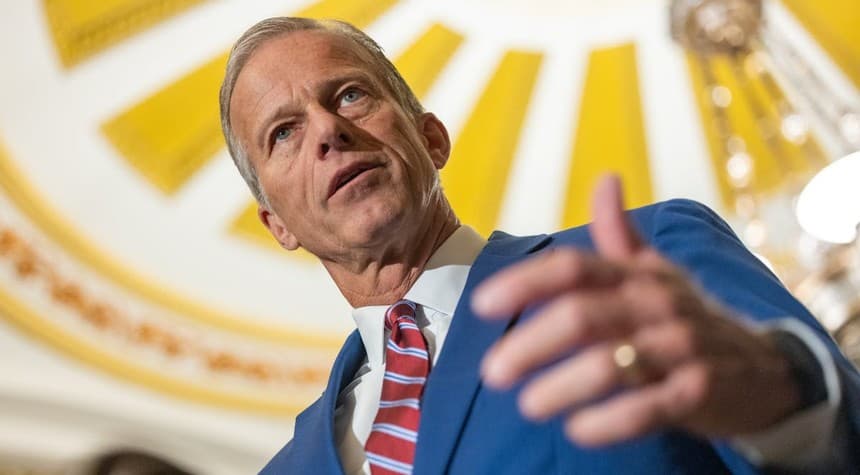
Senate Majority Leader John Thune has signaled his intention to introduce a continuing resolution on Tuesday, a temporary funding measure to keep the lights on while negotiations proceed. But House Minority Leader Hakeem Jeffries and his Democratic colleagues in both chambers have made their position clear. They oppose another stopgap measure, preferring instead to hash out a comprehensive deal.
"I think it's fair to say that it's going to take some more time, and we should at least extend the continuing resolution to allow for that," Thune remarked Tuesday, acknowledging the complexity of the negotiations ahead.
Late Monday night, Jeffries and Senate Minority Leader Chuck Schumer released a joint statement criticizing the Republican counterproposal as inadequate. "Republicans shared an outline of a counterproposal, which included neither details nor legislative text," their statement read. "The initial GOP response is both incomplete and insufficient in terms of addressing the concerns Americans have about ICE's lawless conduct."
Yet by Tuesday, Schumer struck a more optimistic tone, suggesting that an agreement could be reached by Thursday. Such is the nature of these Washington negotiations, where pessimism and optimism can flip faster than a pancake on a hot griddle.
Over in the House, Speaker Mike Johnson is holding firm to his own position. He wants a funding bill that extends through the end of the fiscal year, similar to other government spending measures that President Donald Trump signed into law last week. Johnson argues that the House has already done its work, passing a comprehensive homeland security spending package, and now the Senate should follow suit.
"We've not moved a CR here because our position is, the Senate should pass the House-passed homeland bill," Johnson told reporters. "So us offering a CR would be a concession that we don't believe in that product."
The current impasse stems from a decision to split DHS funding from the rest of the government spending package, a move that came after the shooting of Alex Pretti in Minneapolis amid anti-ICE protests in the region. That split pushed the homeland security funding debate into its own separate track, where it has become entangled with broader questions about immigration enforcement.
The Democratic demands cover a range of operational changes to Immigration and Customs Enforcement, including requirements for more body cameras, prohibitions on agents wearing masks, and mandating judicial warrants rather than administrative warrants for enforcement actions. Republican lawmakers have already dismissed several of these requests as non-starters, setting up what promises to be a contentious negotiation.
The stakes extend well beyond immigration enforcement. DHS encompasses critical agencies including FEMA and the Transportation Security Administration, meaning a funding lapse could have far-reaching consequences for disaster response and airport security nationwide. Americans deserve better than political brinkmanship when it comes to their safety and security.
Related: DOJ Applies Abortion Clinic Protection Law to Synagogue and Church Cases