Four Blue State Governors Continue Taxing Tips and Overtime Despite Federal Relief
Courage. That is what it takes to stand up and do the right thing when political winds blow hard in the other direction. But in four Democrat-led states, governors are choosing a different path, one that keeps reaching deeper into the pockets of waitresses, bartenders, and first responders working overtime just to keep their heads above water.
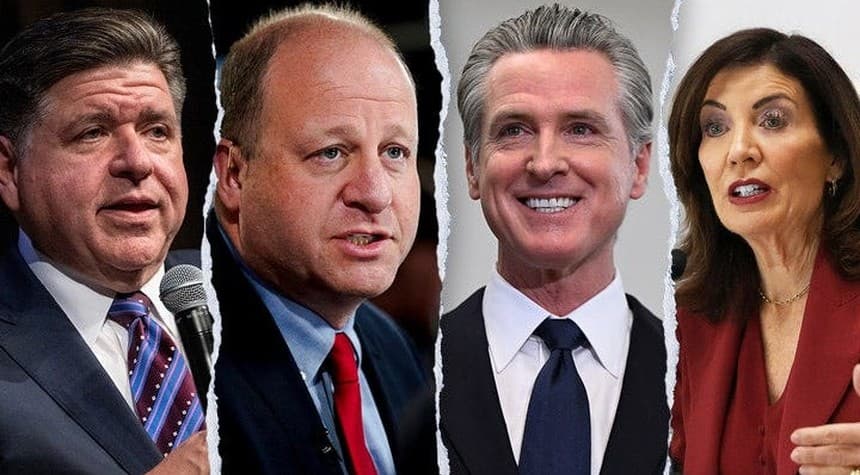
California, New York, Illinois, and Colorado have all rejected President Donald Trump's federal policy eliminating taxes on tips and overtime pay, a key provision in the One Big Beautiful Bill Act. While the federal government has given these workers relief, state capitals in Sacramento, Albany, Springfield, and Denver are singing a different tune entirely.
The facts are these: The governors of the three largest Democrat-run states are continuing to tax tips and overtime earnings. Colorado has taken an even more creative approach, requiring taxpayers to report their federal deductions so the state can add that money back into their taxable income in future years. You read that correctly. What the federal government gives, Colorado intends to take back.
Representative Mike Lawler of New York did not mince words when discussing Governor Kathy Hochul's position. He pointed out that Albany Democrats appear to believe that workers' money belongs to the government first. They are, in his words, picking the pockets of service workers and first responders in a state that already carries the highest tax burden in the nation.
The numbers tell a sobering story. New York consistently ranks among the worst states for outmigration, with working people and jobs leaving in record numbers. When you tax people until they cannot afford to stay, they eventually stop staying.
This controversy arrives at a particularly sensitive moment. Tax Day has come and gone, and with it, a sharp political reality. Affordability remains the defining issue for millions of American families. Republicans have seized on this narrative, pointing out the stark contrast between federal efforts to provide relief and state-level resistance to that same relief.
Representative David Valadao of California expressed disappointment that Sacramento refused to update the state tax code when given the opportunity. California Democrats, he noted, talk frequently about making life more affordable, but when the chance arrived to let hardworking Californians keep more of their earnings, the state legislature and Governor Gavin Newsom turned away.
The political timing cannot be ignored. Several of these governors face midterm gubernatorial campaigns, including Hochul, who is running for reelection, and Newsom, who terms out this year. Voters will have the opportunity to weigh in on whether their state leadership made the right call.
Service workers, first responders, and families who depend on tips and overtime pay now find themselves caught in a peculiar situation. The federal government has provided relief, but their state governments have decided that relief should not extend to the state level.
The question before voters in these four states is straightforward: Do they want leadership that allows them to keep more of what they earn, or do they prefer governments that continue to tax every dollar they can reach? Come election time, that question may prove more powerful than any campaign advertisement or political promise.
Related: New Bill Takes Aim at State and Local Rules Driving Up Housing Costs for Americans