
The intersection of national security and immigration enforcement has taken an unusual turn at one of America’s most hallowed military training grounds, raising questions that deserve straight answers.
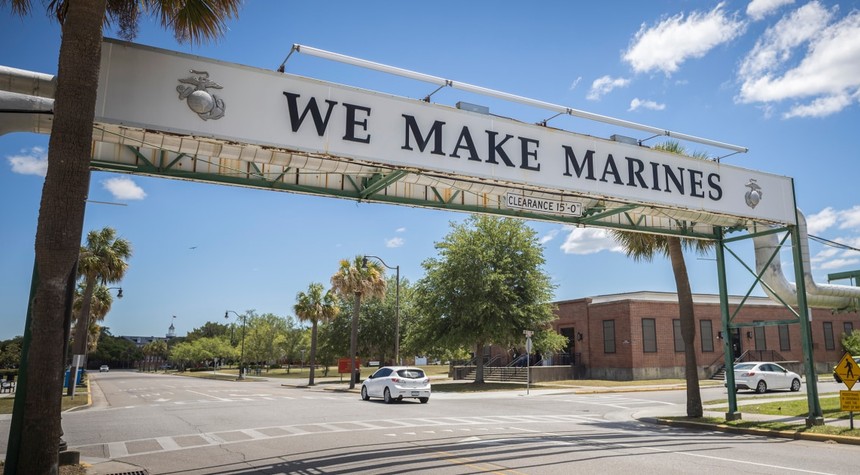
Immigration and Customs Enforcement agents will be stationed at Marine Corps Recruit Depot Parris Island in South Carolina this week, positioned to screen family members attending graduation ceremonies for the nation’s newest Marines. This marks a departure from standard operating procedure at the historic training facility, where generations of young Americans have transformed into United States Marines since 1915.
The Marine Corps frames this development as part of heightened force protection measures implemented across military installations as the United States continues combat operations in Iran. New access requirements mandate that all visitors present REAL IDs, U.S. passports, or U.S. birth certificates to enter any Marine Corps facility.
Here is where the policy intersects with immigration status. Undocumented immigrants generally cannot obtain federal REAL IDs and do not possess U.S. passports or American birth certificates. Family members arriving at the gates without proper documentation may now face questioning from ICE officials during recruit family days and graduation events scheduled for this week.
The Marine Corps posted a notice on the Parris Island website explaining that “federal law enforcement personnel will be present at installation access points to conduct enhanced screening and lawful immigration status inquiries during recruit family and graduation days.” A spokesperson for the depot confirmed this represents the first time in recent memory that federal law enforcement agencies have supported base access operations at Parris Island in this capacity.
The timing carries particular weight. Marine recruits endure thirteen weeks of grueling training without seeing their families. Graduation day represents not merely a ceremony but a reunion, a moment when parents and loved ones finally witness the transformation of their sons and daughters into Marines. That reunion now comes with an additional layer of federal scrutiny.
Department of Homeland Security officials have pushed back against suggestions that arrests would occur at the graduation. A spokesperson stated flatly that ICE will not be making arrests at the basic training graduation. However, the presence of immigration enforcement personnel at access points, combined with documentation requirements that undocumented immigrants cannot meet, creates an obvious predicament for families in mixed-status households.
The Marine Corps has encouraged visitors to prepare for additional screening measures and to bring proper identification while limiting items carried onto the installation. Graduation ceremonies are scheduled for Friday morning, with family visitation beginning Wednesday.
This situation presents a collision of principles that Americans hold dear. We honor military service and the sacrifices of those who defend our nation. We also maintain laws governing immigration and border security. When a young person volunteers to serve in the Marine Corps, their family’s immigration status becomes a secondary consideration to most Americans. That recruit has stepped forward to defend this country, regardless of their family circumstances.
The question now facing military families is whether the price of witnessing a loved one’s graduation includes potential immigration consequences. For some families, that calculation may result in empty seats at a ceremony that should represent pure American pride.
Related: Rep. Sheila Cherfilus-McCormick Faces Expulsion After Bipartisan Ethics Committee Verdict