
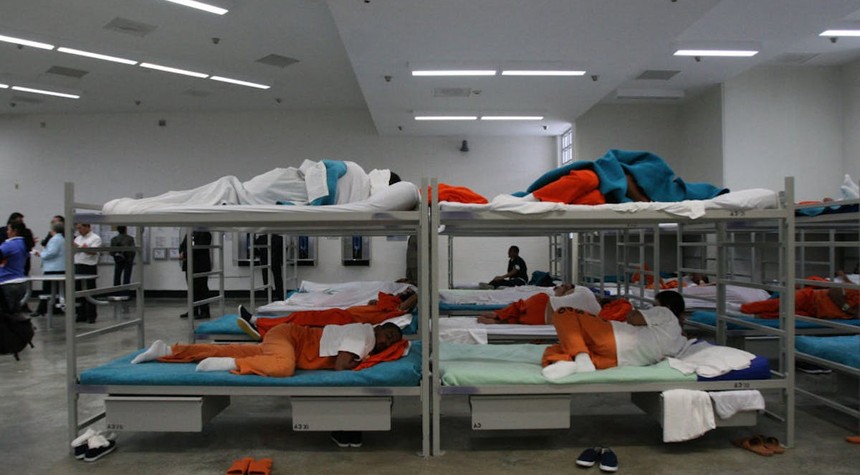
The numbers tell a story that should concern every American who believes in the rule of law. Since President Trump returned to office, more than 18,000 illegal immigrants have filed habeas petitions to challenge their detention in federal courts. That figure exceeds the total number of such challenges filed during the previous three administrations combined.
Let that sink in for a moment.
What we are witnessing is nothing short of a coordinated legal strategy designed to undermine immigration enforcement at the precise moment when this administration has committed to restoring order at our borders. The question that demands asking is whether our judicial system has become an unwitting accomplice in this effort.
Scott Mechkowski, who served as ICE deputy field office director in New York, described the situation plainly. The combination of increased enforcement, mandatory detention policies, and what he termed “an increased perception of judicial bias” has sent habeas petition rates through the roof.
The impact on border states has been particularly severe. In Arizona, United States Attorney Timothy Courchaine watched his office go from handling ten habeas petitions in immigration cases to nearly a thousand since Trump’s inauguration. The vast majority of these petitions request bond hearings, and according to Courchaine, the government is losing almost all of them.
The mechanics of this legal maneuver reveal why it has become so popular among immigration attorneys. When detainees file habeas petitions, their cases move from immigration courts into district courts. There, federal judges possess far broader authority to grant relief than immigration judges ever could. District court judges operate with considerable independence, issuing orders according to their own interpretation of the law.
Mechkowski pointed out that district courts have become favorable venues for illegal immigrants precisely because many federal judges lack deep familiarity with immigration law. This knowledge gap creates opportunities for legal arguments that might not survive scrutiny in specialized immigration courts.
The time factor alone makes this strategy attractive. In detention, an illegal immigrant typically receives a hearing within one or two months. Once released, however, the calculus changes dramatically. In New York, Mechkowski noted, non-detained cases were being scheduled four years out. That delay is not merely an inconvenience for the system. It represents four years during which an illegal immigrant can establish roots, have children, maintain clean records, and build what courts call “equities” that influence future proceedings.
Dallas attorney Dan Gividen has restructured his entire practice around this opportunity, shifting from fighting removal cases before immigration judges to exclusively arguing for client releases in district courts. Texas alone accounts for roughly 40 percent of new habeas cases, reflecting both the volume of detentions in border states and the effectiveness of this legal strategy.
The Trump administration came to office promising to restore immigration enforcement and expedite deportations of those in the country illegally. Yet here we find the federal court system functioning as a release valve that undermines those very objectives. Whether through unfamiliarity with immigration law, ideological opposition to enforcement, or simple adherence to legal procedure, district judges are granting bond at rates that effectively nullify detention policies.
This is not how the system was designed to work. The American people deserve better.
Related: Skykomish School District Rocked by Arrest of Physical Education Teacher in Child Rape Case