Courage. That word used to mean something in Washington, particularly when it came to standing on principle rather than political convenience. But what we witnessed this past Sunday was a masterclass in the kind of political gymnastics that would make an Olympic athlete blush.
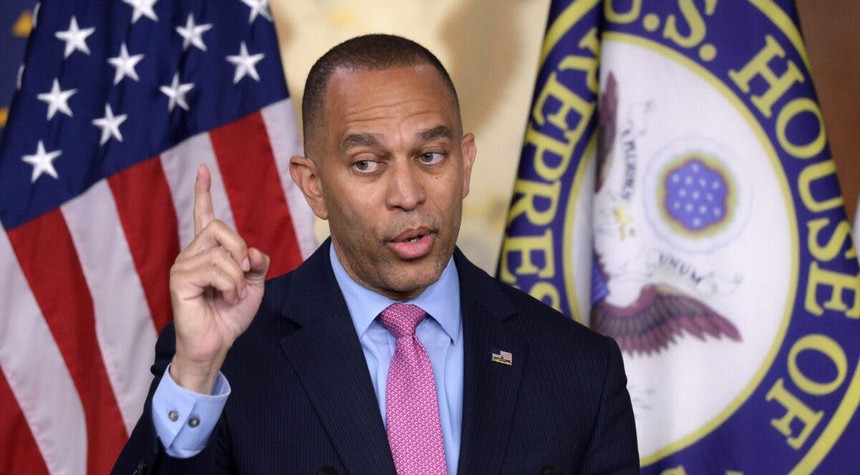
Two prominent Democratic lawmakers, House Minority Leader Hakeem Jeffries and Senator Adam Schiff, took to the airwaves to lecture President Trump about the sanctity of states’ rights when it comes to election procedures. Their newfound constitutional reverence would be admirable if it were not so transparently convenient, given that both men championed the exact opposite position when their party controlled the levers of power just five years ago.
The controversy erupted after President Trump made an admittedly provocative suggestion during an interview, floating the idea that Republicans should “nationalize” voting in roughly fifteen states where he believes election integrity remains a serious concern. The comment was characteristically bold and, according to White House clarification, specifically targeted at jurisdictions with documented fraud problems. Trump warned that without addressing illegal immigration and election security, Republicans faced an uphill battle in future contests.
Enter Jeffries and Schiff, suddenly draped in the mantle of federalism like it was their birthright.
During an appearance on a Sunday morning program, Jeffries faced pointed questioning about voter identification requirements. When pressed on polling showing that 83 percent of Americans, including 71 percent of Democrats, support requiring identification to vote, Jeffries performed an impressive rhetorical dance. He insisted states should decide their own election procedures while simultaneously arguing that Republican efforts to implement voter ID constituted “clear and blatant voter suppression.”
The irony here is thick enough to cut with a butter knife. These are the same Democratic leaders who, not long ago, pushed aggressively for federal takeover of election laws through various legislative proposals that would have stripped states of their traditional authority over voting procedures. The sudden conversion to states’ rights principles appears less like genuine constitutional conviction and more like situational ethics.
What makes this particularly galling is the transparent nature of the reversal. When Democrats wanted to federalize elections, they wrapped their arguments in the language of voting rights and access. Now that a Republican president suggests federal involvement, suddenly the Tenth Amendment matters again.
The question Americans should be asking is not whether Trump’s off-the-cuff suggestion was wise policy. Rather, they should wonder why their elected representatives cannot maintain consistent principles regardless of which party occupies the White House. This kind of political shape-shifting erodes public trust in institutions that desperately need credibility.
Jeffries claimed that Republicans push voter ID laws because “they know that if there’s a free and fair election in November, they’re going to lose.” Yet he offered no explanation for why seven out of ten Democrats support such measures. Are they also engaged in voter suppression?
The American people deserve better than this kind of cynical positioning. They deserve leaders who stand on principle whether their party is in power or not. What they are getting instead is a political class that treats the Constitution like a buffet, picking and choosing which portions to honor based on momentary advantage.
That is not leadership. That is political opportunism, plain and simple.
Related: Virginia Democrats Push New Tax on Fantasy Football Leagues