Minnesota Man Led From Home in Underwear During Warrantless ICE Raid
The troubling details emerging from St. Paul, Minnesota tell a story that ought to give every American pause, regardless of where they stand on immigration enforcement.
Federal immigration agents forced their way into a Minnesota home Sunday afternoon, detaining a United States citizen at gunpoint without presenting a warrant, then paraded him through his neighborhood in subfreezing temperatures wearing nothing but underwear and sandals. The incident, captured on video and corroborated by multiple witnesses, raises serious questions about the boundaries of law enforcement authority in our constitutional republic.
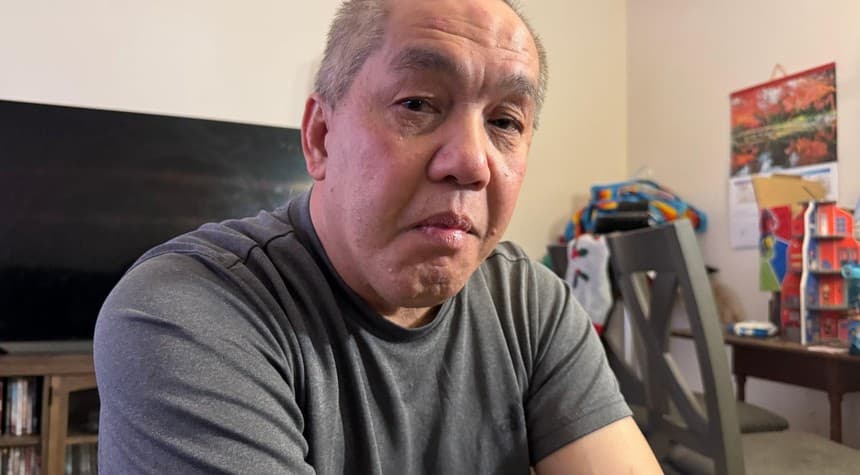
ChongLy "Scott" Thao, a naturalized American citizen for decades, was awakened from an afternoon nap when masked agents began pounding on his door. Following his instruction, his daughter-in-law refused to open it. What happened next reads like something from a different country entirely.
The agents breached the door and stormed inside, weapons drawn, shouting at the family. Thao's 4-year-old grandson watched and wept as his grandfather, still in his underwear, was handcuffed and led outside with only a blanket around his shoulders. The temperature was well below freezing.
"I was shaking," Thao recounted. "They didn't show any warrant; they just broke down the door."
When Thao asked his daughter-in-law to retrieve his identification, the agents told him they did not want to see it. This detail becomes particularly significant given what followed.
More than a dozen armed federal agents participated in the operation, which drew immediate response from neighbors who gathered to protest, blowing whistles and horns. Community member Mark Goldberg, who arrived within minutes after being alerted through a neighborhood network, described the scene as resembling military precision.
The agents then transported Thao to what he described as "the middle of nowhere," forcing him out of the vehicle in the frigid conditions to photograph him. Only then did they request the very identification they had earlier refused to examine.
Upon discovering that Thao was indeed an American citizen with no criminal record, the agents returned him to his home after one to two hours. They demanded to see his identification at that point, then departed without offering an apology for the detention or the damaged door.
The Department of Homeland Security later characterized the operation as "targeted," claiming agents were seeking two convicted sex offenders. This explanation has done little to satisfy local officials or residents who witnessed the incident.
St. Paul Mayor Kaohly Her, herself a Hmong American, issued a pointed statement: "ICE is not doing what they say they're doing. They're not going after hardened criminals. They're going after anyone and everyone in their path. It is unacceptable and un-American."
This incident comes amid a significant surge of federal immigration enforcement in the Twin Cities region, which has already sparked controversy over warrantless arrests, confrontations with protesters, and a fatal shooting of a mother of three.
The Constitution's Fourth Amendment protections against unreasonable searches and seizures exist precisely to prevent such scenarios. These protections do not evaporate based on an individual's appearance, surname, or the neighborhood in which they reside.
Effective immigration enforcement and constitutional governance are not mutually exclusive concepts. Americans can support border security while simultaneously demanding that federal agents respect the rights guaranteed to every citizen. When masked agents can break down doors without warrants, detain citizens without cause, and parade them half-dressed through freezing streets, we have crossed a line that threatens the liberty of us all.
The facts of this case demand accountability and answers. What protocols failed? Who authorized a warrantless entry? And what measures will prevent similar violations in the future? These questions deserve responses, and the American people deserve better than what happened in St. Paul.
Related: Noem Says Judge’s Order on Protest Tactics Changes Nothing for Federal Agents