Paralympian Turek Secures Democratic Nomination in Battle for Iowa Senate Seat
The battle lines are drawn in Iowa, and what happens there this November could well determine which party controls the United States Senate come January.
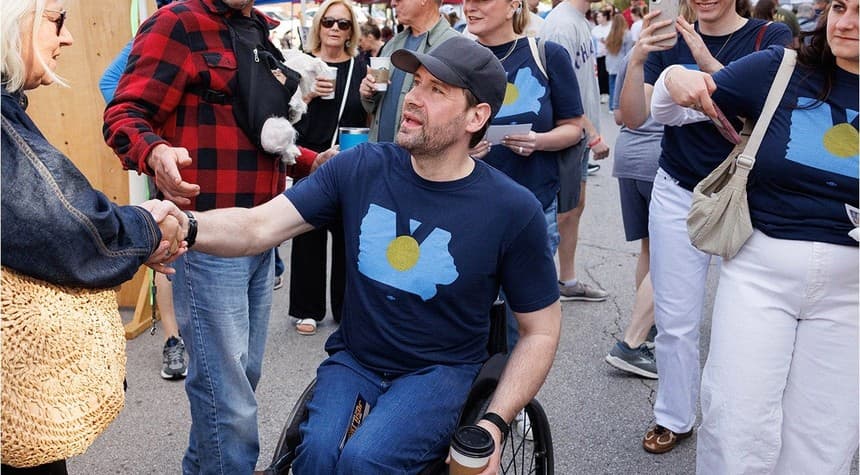
Democratic state Representative Josh Turek secured his party's nomination Tuesday night in the race to succeed retiring Republican Senator Joni Ernst. The Paralympian defeated state Senator Zach Wahls in what turned out to be a decisive primary victory, setting up what promises to be one of the most closely watched Senate contests in the nation.
Turek will now face Republican Representative Ashley Hinson, who sailed through her own primary with little opposition. The matchup represents exactly the kind of competitive race that keeps political strategists up at night and sends both parties scrambling for resources and attention.
Make no mistake about the stakes here. Republicans currently hold a razor-thin majority in the Senate, and Democrats have circled this Iowa seat as a prime pickup opportunity. It is one of roughly a dozen races nationwide that will determine the balance of power in the upper chamber, and with it, the legislative agenda for the next two years.
Ernst's retirement opened a door that Democrats believe they can walk through. Iowa, once considered reliably red in federal elections, has shown increasing competitiveness in recent cycles. The state's political landscape has shifted, though Republicans maintain it remains fundamentally conservative territory when voters focus on the issues that matter most to their daily lives.
Turek brings an compelling personal narrative to the race. His background as a Paralympian offers a story of perseverance that transcends partisan politics, though how that translates into votes in a midterm election remains to be seen. Democrats are banking on his ability to connect with voters across the political spectrum, particularly in a state where personal character and work ethic still carry considerable weight.
Hinson, meanwhile, represents the Republican establishment's best hope to maintain their Senate majority. As a sitting member of the House Select Committee on China, she has positioned herself as a leader on national security issues, particularly regarding the artificial intelligence race between the United States and China. Her emphasis on American leadership in technology development resonates with voters concerned about the nation's competitive position on the world stage.
The race will likely hinge on several factors: the national political environment, which party's base turns out in greater numbers, and whether independent voters break decisively for one candidate or the other. Both campaigns are preparing for a bruising battle that will test their fundraising capabilities, organizational strength, and message discipline.
What unfolds in Iowa over the coming months will tell us much about the mood of the American electorate. This is retail politics at its finest, where candidates still shake hands at farmers markets and town halls matter. The outcome here could very well tip the balance of power in Washington, and both parties know it.
The race is on, and Iowa voters will have the final say.
Related: Trump Administration Fund for Weaponization Victims Frozen by Court Order