Rubio Offers Cautious Update on Iran Negotiations as US Blockade Reaches 100 Ships
The diplomatic dance with Iran continues to unfold with all the certainty of a weather forecast in tornado season. Secretary of State Marco Rubio, speaking from New Delhi on Saturday evening, offered the kind of carefully measured words that signal just how delicate these negotiations have become.
Standing at the entrance to a formal dinner at the Roosevelt House, the U.S. Embassy residence in India's capital, Rubio painted a picture of talks that could break either way. "There may be news later today. I don't have news at this very moment, but there might be some news a little later today," he told reporters. Then came the qualifier that speaks volumes about where things stand: "There may not be. I hope there will be, but I'm not sure yet."
This is the language of diplomacy when the stakes are measured in potential lives lost and regional stability hanging in the balance.
Rubio echoed similar sentiments from Friday, acknowledging progress while simultaneously pumping the brakes on optimism. "There's been some progress done, some progress made, even as I speak to you now, there's some work being done," he said. The timeline remains fluid, somewhere between later that day and a couple of days out, assuming an agreement materializes at all.
The Secretary of State made clear that President Trump's conditions remain non-negotiable. Iran cannot obtain a nuclear weapon. The Strait of Hormuz must reopen without tolls. Tehran must turn over its enriched uranium. These are not starting positions for bargaining. They are the terms.
"This problem will be solved, as the president's made clear, one way or the other," Rubio stated, a phrase he repeated for emphasis. The implication of that "other" way hangs heavy in the air.
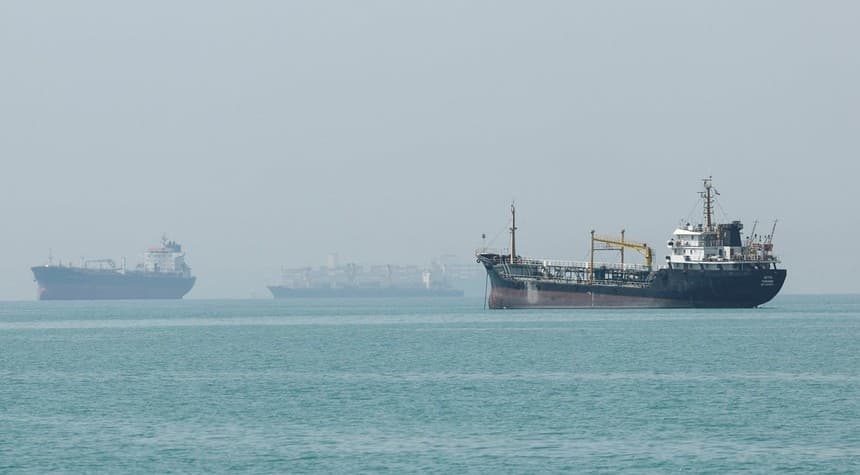
Meanwhile, the facts on the water tell their own story. The U.S. blockade of the Strait of Hormuz has now reached a symbolic milestone, with 100 commercial vessels either redirected or turned away from Iranian ports. U.S. Central Command reported the figure on Saturday, underscoring the scale of the operation that began on April 13.
The numbers are substantial. Fifteen thousand service members, 200 aircraft, and 20 warships have participated in an operation that has effectively choked off Iranian trade. Admiral Brad Cooper, CENTCOM commander, praised the precision of the mission, noting that zero trade has moved into or out of Iranian ports, applying maximum economic pressure.
Twenty-five humanitarian aid ships have been permitted through, a detail worth noting for those who claim the blockade lacks moral consideration.
The diplomatic back channels remain active. The Emir of Qatar, Sheikh Tamim bin Hamad Al Thani, spoke with President Trump by phone Saturday morning, shortly after 7 a.m. Eastern time. The Qatari government provided no details, but the conversation's timing is telling. Qatar has found itself in Iran's crosshairs, targeted by missiles and drones in retaliation for U.S. and Israeli operations. Qatari officials joined Pakistani mediators in Tehran this weekend, working to find a path forward.
Secretary Rubio also met with Indian Prime Minister Narendra Modi to discuss the Middle East crisis, with particular attention to energy costs. India, like much of the world, watches these negotiations with concern about what happens to oil markets if diplomacy fails.
The question now is whether Tehran will accept reality or continue down a road that leads nowhere good. As Rubio suggested, an answer may come soon. One way or another.
Related: Democratic Representatives Vow to Expel Texas Candidate Over Antisemitic Statements