Senate Hearing Descends into Physical Struggle as Protester Resists Removal from Capitol
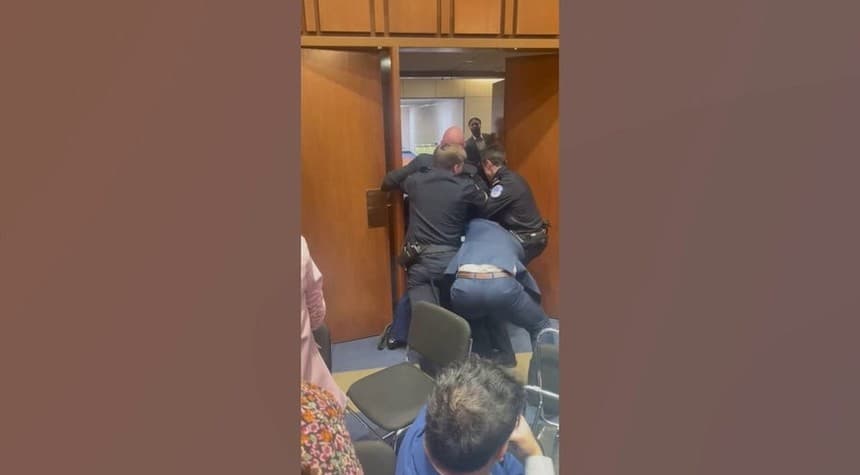
Well, folks, what unfolded Wednesday on Capitol Hill serves as yet another reminder that the people's business does not always proceed with the decorum we might hope for in the halls of democracy.
Senator Tim Sheehy of Montana, himself a former Navy SEAL, found himself in an unexpected position during a Senate Armed Services Subcommittee hearing. The freshman senator jumped into action when Capitol Police struggled to remove a disruptive protester from the proceedings, and what transpired next has raised serious questions about security protocols and the volatile nature of today's political climate.
The protester in question was Brian McGinnis, a Marine Corps veteran who is currently running as a Green Party candidate for Senate in North Carolina. During the subcommittee hearing on the Current Readiness of the Joint Force, McGinnis stood and shouted, "America does not want to send its sons and daughters to war for Israel," before Capitol Police moved to escort him from the room.
What should have been a routine removal turned into something far more concerning. Video footage captured the struggle as two officers attempted to corral McGinnis toward the exit. That is when Senator Sheehy, drawing on his military training, stepped in to assist.
The situation escalated quickly. McGinnis grabbed hold of the door frame, wedging his arm between the door and its frame in an apparent effort to resist removal. As officers and the Montana senator pushed to dislodge him, witnesses reported hearing a loud cracking sound. The nature and extent of any injuries remain unclear at this hour.
Senator Sheehy addressed the incident directly in a statement, describing McGinnis as "an unhinged protester" who was "fighting back" against Capitol Police. "I decided to help out and deescalate the situation," Sheehy explained. He added pointedly, "This gentleman came to the Capitol looking for a confrontation, and he got one. I hope he gets the help he needs without causing further violence."
Capitol Police issued their own statement, characterizing McGinnis as "an unruly man who started to illegally protest during a hearing" and who "put everyone in a dangerous position by violently resisting and fighting our officers' attempts to remove him from the room."
Now, there are layers to this story that bear examination. Here we have two military veterans, both having served their country, on opposite sides of a physical altercation in the United States Capitol. McGinnis, whatever one thinks of his methods or message, clearly felt compelled to make his voice heard on matters of war and foreign policy. Sheehy, now a sitting senator, saw a situation spiraling and made a split-second decision to intervene.
The question that hangs in the air is whether this incident represents an isolated disruption or a symptom of deeper divisions within our body politic. When protesters feel driven to such extreme measures, and when senators find themselves physically grappling with citizens in the corridors of power, we would do well to ask ourselves what has brought us to this point.
The safety of our elected officials and the security of our democratic institutions must be maintained. That much is beyond dispute. But the temperature in our national discourse continues to rise, and incidents like this one suggest we may be approaching a boiling point that serves no one's interests.
Related: Trump Secures Big Tech Commitment to Shield Americans from AI Energy Costs