
The Pacific Ocean off California’s coast has become the latest battleground in the ongoing struggle to secure American borders, and what federal authorities discovered this month should concern every American who cares about public safety.
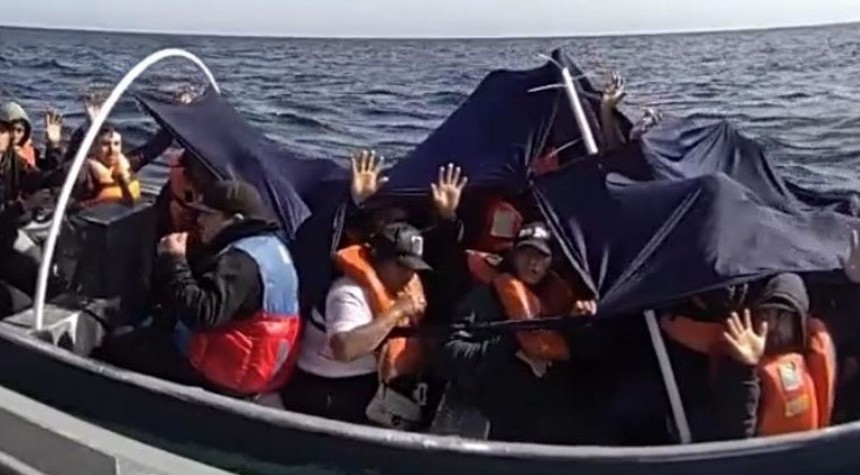
Three smuggling vessels crammed with 60 illegal immigrants attempted to reach California shores in recent weeks before federal agents intercepted them. Among those apprehended were individuals with criminal records that read like a prosecutor’s nightmare: DUI, felony hit-and-run, drug trafficking, aggravated assault with a weapon, domestic violence, and active warrants for resisting arrest. Others had histories involving burglary, possession of burglary tools, receiving stolen property, and making false police reports.
The facts speak plainly. These were not desperate families seeking opportunity. These were calculated smuggling operations transporting individuals with documented criminal histories into American communities.
“These interdictions show the great lengths dangerous criminals will go to avoid apprehension, including taking to the open ocean in unsafe, overcrowded vessels,” said Hunter Robinson, Executive Director of Air and Marine Operations Southwest Region. “Their desperation puts lives at risk. Our crews are dedicated to stopping these dangerous individuals far from shore to keep our communities safe.”
The sequence of events unfolded rapidly. On April 17, agents intercepted a 24-foot vessel near San Clemente Island, apprehending 13 illegal migrants, including seven men, five women, and one juvenile girl. The group was transported to Ballast Point Naval Base in San Diego for processing.
The following day brought another interception near San Nicolas Island, where federal agents apprehended 29 Mexican nationals. The Coast Guard brought them to Newport Harbor and transferred custody to Border Patrol.
On April 21, the Coast Guard, working alongside a CBP Air and Marine Operations aircrew, stopped a 25-foot cuddy cabin boat carrying 18 Mexican illegal migrants. Authorities had spotted the vessel the previous day off the coast of Ensenada, Mexico.
The pattern emerging here tells a larger story about the economics of illegal immigration. Since President Donald Trump sealed off the U.S.-Mexico border, smugglers have grown increasingly desperate to preserve their profit streams. Under the previous administration, human smuggling by cartels became more lucrative than drug trafficking. Now, with land routes severely restricted, these criminal organizations are turning to the waterways.
Coast Guard Captain Jason Hagen, Southwest District chief of enforcement, explained the challenge authorities face. “As you lock down the land border, the cartels will need to make their money, so they push to the maritime, to the water side. And, unfortunately, there is no border wall in the ocean; we’re challenged with the tyranny of distance.”
That phrase deserves repeating: there is no border wall in the ocean. The Pacific coastline stretches for hundreds of miles, and monitoring every potential landing spot requires constant vigilance and coordination between multiple federal agencies.
The increase in maritime smuggling interdictions represents both success and challenge. Success, because it demonstrates that border security measures are working well enough to force smugglers into riskier, more detectable routes. Challenge, because these desperate measures put lives at risk and require sustained resources to combat effectively.
The criminal histories among those apprehended underscore why border security matters. This is not an abstract policy debate. These are real people with documented criminal backgrounds who were being smuggled into American communities where they could resume their activities.
The courage remains with the federal agents working these waters, often in dangerous conditions, to keep Americans safe from those who would exploit our borders for profit and criminal enterprise.
Related: Internal Audit Launched Over Possible Withholding of Epstein Records