
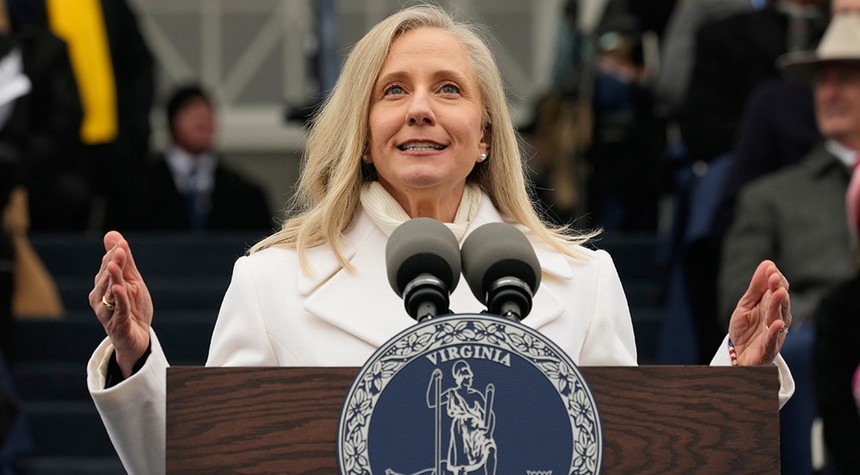
The clash between federal immigration enforcement and state sanctuary policies has reached a new flashpoint in Virginia, where Governor Abigail Spanberger finds herself in hot water over her handling of a murder case involving an illegal immigrant.
The facts of the matter are straightforward, though the political implications run deep. Abdul Jalloh, a national of Sierra Leone residing in the country illegally, stands accused of stabbing 41-year-old Stephanie Minter to death at a Fredericksburg bus stop this past February. The Department of Homeland Security issued a detainer request for Jalloh, a standard procedure in such cases. Governor Spanberger’s response has raised eyebrows across the political spectrum.
The Democratic governor told DHS that if the department wants to take custody of Jalloh, it must first obtain a judicial warrant. Legal experts and administration officials have been quick to point out a fundamental problem with this requirement. Judicial warrants, as they relate to criminal proceedings, have no bearing on immigration enforcement actions.
White House deputy chief of staff Stephen Miller did not mince words in his criticism of the governor’s position. Judicial warrants “have nothing to do with deportation,” Miller stated publicly. “Zero. Nothing.”
This is not merely a technical legal dispute. At its heart lies a question that cuts to the core of our federal system and public safety. A mother is dead, allegedly at the hands of someone who should not have been in this country. Now state officials are erecting procedural barriers that federal authorities say have no legal foundation.
The broader context cannot be ignored. This confrontation in Virginia represents the latest skirmish in an ongoing battle between the Trump administration and what have become known as sanctuary jurisdictions. The pattern has become familiar. DHS issues detainer requests for individuals in state or local custody who are in the country illegally and have been charged with or convicted of crimes. Sanctuary policies then limit or prohibit cooperation with federal immigration authorities.
The administration’s position is clear and consistent. These sanctuary policies, they argue, result in dangerous criminals being released back onto American streets when they could and should be transferred to federal custody for deportation proceedings. The human cost, they contend, is measured in victims like Stephanie Minter.
Democratic leaders in sanctuary jurisdictions offer a different rationale. They maintain their policies actually enhance public safety by encouraging illegal immigrants to cooperate with local law enforcement without fear of deportation. They argue that this cooperation helps solve crimes and keeps communities safer overall.
Governor Spanberger has also drawn attention for her praise of anti-ICE protests and school walkouts in her response to President Trump’s State of the Union address, adding fuel to the fire of this controversy.
The legal question at the center of this dispute is not particularly complex. Immigration detainers are civil administrative tools, not criminal warrants. They operate under different legal standards and procedures. Requiring a judicial warrant for an immigration detainer is, according to legal experts, a category error that conflates two distinct areas of law.
For the family of Stephanie Minter, these legal and political debates offer cold comfort. The larger question remains whether state policies designed ostensibly to protect illegal immigrants are instead protecting those who pose genuine threats to public safety.
Related: House Committee Votes to Subpoena Attorney General Bondi Over Epstein Investigation Handling