Spanberger Toughens Assault Weapon Ban After Justice Department Threatens Lawsuit
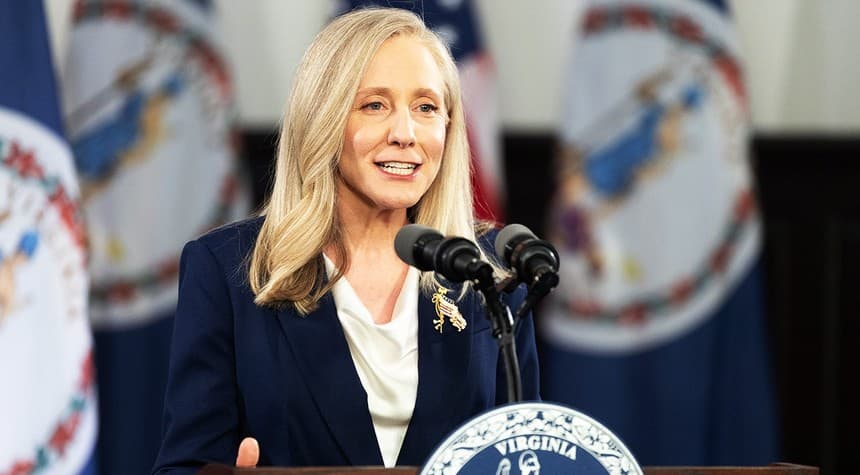
The battle lines over the Second Amendment are being drawn in Virginia, and they run deeper than the Shenandoah Valley itself.
Virginia Governor Abigail Spanberger signed a series of gun-control measures this week that have set off alarm bells from Richmond to Washington. The Democratic governor did not simply approve the legislation as written. She amended it, toughening the language in ways that critics say could transform a targeted restriction into a sweeping ban on firearms commonly owned by law-abiding Virginians.
The controversy centers on House Bill 217 and Senate Bill 749, legislation designed to ban certain assault-style firearms. Spanberger's revisions removed the word "fixed" from the bill's definition of what constitutes an assault firearm. That single deletion, according to Republican lawmakers, could dramatically expand the scope of weapons subject to prohibition.
House of Delegates Minority Leader Terry Kilgore minced no words in his assessment. The changes, he argued, appear to create a ban on any firearm capable of accepting a magazine holding more than fifteen rounds. That description fits the vast majority of firearms in Virginia that citizens use for lawful purposes every day.
"If there was any doubt that Gov. Spanberger was coming for our firearms, this substitute removes it," Kilgore stated. The concern is not merely academic. Millions of Virginians own semi-automatic rifles and pistols that could fall under this expanded definition.
The timing of Spanberger's actions carries particular significance. Just days before the governor made her amendments, the United States Department of Justice issued a stark warning to Virginia officials. In a letter that pulls no punches, Assistant Attorney General for Civil Rights Harmeet Dhillon put the Commonwealth on notice that federal litigation would follow any attempt to enforce unconstitutional restrictions on firearms ownership.
The Justice Department's position rests on solid legal ground. Dhillon cited the Supreme Court's unanimous recognition that AR-15 style rifles are both widely legal and purchased by ordinary consumers for lawful purposes. The Second Amendment, she emphasized, protects the rights of law-abiding citizens to own and use such firearms.
"This letter provides formal notice that the Civil Rights Division will commence litigation in the event the Commonwealth of Virginia enacts certain bills that unconstitutionally limit law-abiding Americans' individual right to bear arms," Dhillon wrote to Virginia Attorney General Jay Jones.
The federal government's warning could not have been clearer. Any attempt to restrict the making, buying, or selling of AR-15s and other semi-automatic firearms in common use would trigger immediate legal action seeking an injunction.
What makes this confrontation particularly noteworthy is the collision between state and federal authority on a constitutional question. Virginia's Democratic leadership appears determined to push forward with restrictions that the federal government has already declared unconstitutional. The result is a legal showdown that could have ramifications far beyond the Old Dominion's borders.
Republicans have also accused Spanberger of misrepresenting her positions to voters, suggesting her current actions contradict earlier campaign rhetoric. The charge of deception adds a political dimension to what is already a constitutional crisis in the making.
For Virginia gun owners, the practical implications are profound. Firearms they purchased legally, own responsibly, and use lawfully could suddenly be reclassified as prohibited weapons. The uncertainty alone has constitutional implications, as citizens have a right to know clearly what the law permits and forbids.
The stage is set for a significant legal battle, one that will test the limits of state authority against federal constitutional protections. Virginia has become the testing ground, but the outcome will resonate across America.
Related: Missouri Senator Calls for Federal Probe of Mifepristone Safety Concerns