Speaker Johnson Backs Judicial Impeachment Push as GOP Targets District Court Judges
Courage, as they say, is not the absence of fear but the willingness to act despite it. And right now, House conservatives are showing they have the courage to take on what they see as a fundamental threat to constitutional governance.
Speaker Mike Johnson has given his blessing to a renewed effort to impeach federal judges accused of overstepping their authority in blocking President Trump's agenda. This represents a significant shift in strategy for House Republican leadership, and it signals that patience with what conservatives view as judicial activism has finally run out.
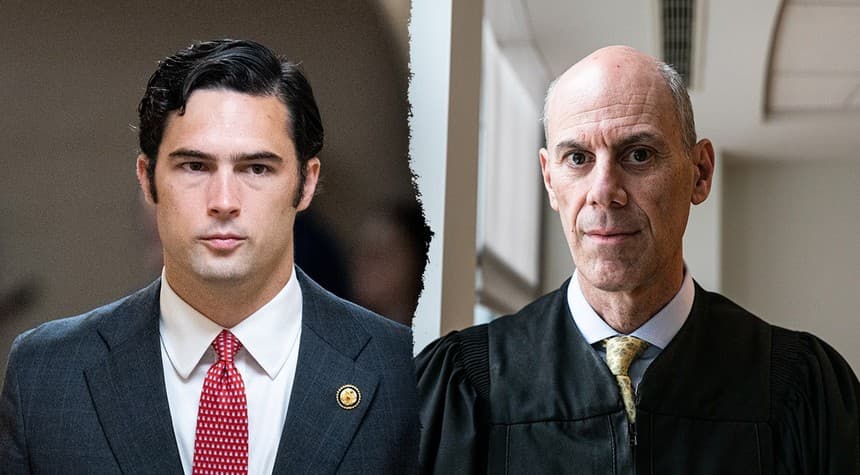
Representative Andy Ogles of Tennessee confirmed Thursday evening that Johnson remains firmly in support of moving forward with at least one impeachment. This comes after the speaker's comments during his weekly press conference, where he stated plainly, "I'm for it."
The question that needs asking is this: When does judicial review cross the line into judicial legislating? That is the heart of this matter, and it deserves serious examination.
Last year, several House conservatives introduced impeachment articles against various federal judges. Ogles himself targeted U.S. District Judge John Bates for blocking a Trump executive order on transgender recognition under federal law. He also went after District Judge Theodore Chuang following a ruling that halted efforts by the Department of Government Efficiency to crack down on foreign aid spending.
At the time, those efforts went nowhere. House Republican leadership viewed impeachment as impractical and instead favored legislation by Representative Darrell Issa of California to limit district judges' ability to issue nationwide injunctions. That bill passed the House but died in the Senate, as so many reasonable reforms do.
But circumstances have changed, and so has the calculus. The facts on the ground matter, and the facts show a pattern that conservatives find deeply troubling.
U.S. District Judge James Boasberg has become a focal point of Republican frustration. His rulings on immigration cases, including decisions involving the administration's efforts to fly migrants to El Salvador rather than detaining them domestically, have drawn sharp criticism. More recently, revelations that Boasberg approved the seizure of Republican lawmakers' phone records during former special counsel Jack Smith's investigation have intensified calls for accountability.
Representative Brandon Gill of Texas, who led an impeachment resolution against Boasberg last year, expressed optimism about Johnson's apparent change of heart. The momentum appears to be building among the conservative wing of the House Republican conference.
The constitutional framework is clear: Congress has the power to impeach federal judges for "high crimes and misdemeanors." The debate centers on whether these judges have committed such offenses or whether they are simply making rulings that one political party disagrees with. That distinction matters enormously in a system built on checks and balances.
Critics will argue that this represents an assault on judicial independence. Supporters counter that judicial independence was never meant to be judicial supremacy, and that accountability must exist when judges appear to make policy rather than interpret law.
The truth, as it often does, likely lies somewhere in the nuanced middle ground. But what cannot be disputed is that this represents a significant escalation in the ongoing tension between the executive and judicial branches under the Trump administration.
Whether these impeachment efforts gain sufficient support to move forward remains to be seen. The Senate would ultimately decide the fate of any impeached judge, and that body has its own political calculations to consider. But the willingness of House conservatives to pursue this path, with the speaker's backing, signals a new chapter in the debate over the proper role of federal courts in American governance.
Related: Pro-Life Group Demands Federal Action on Abortion Pill Distribution Practices