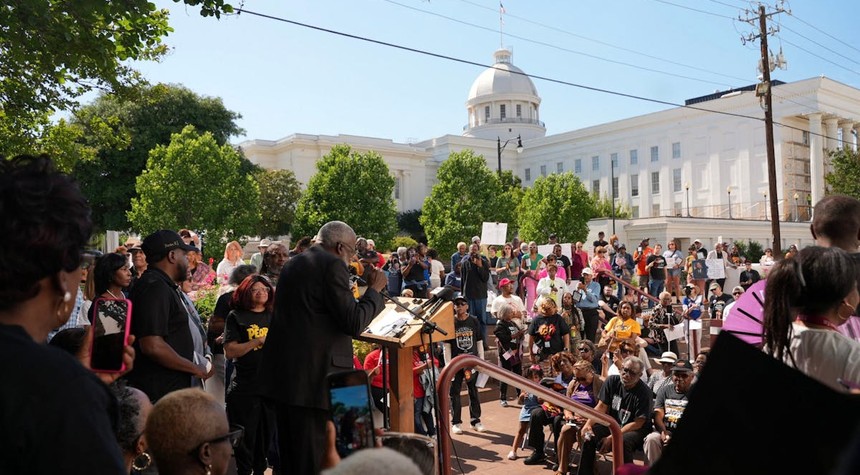
The marble halls of the Supreme Court echoed with consequences on Monday as the justices delivered a decision that reshapes the political landscape in Alabama and sends ripples across the nation’s approach to voting rights.
In a move that underscores the seismic shift following the court’s recent landmark ruling, the justices cleared the path for Alabama Republicans to implement a congressional voting map that had been blocked by lower courts. The decision represents the latest chapter in an ongoing national debate about race, representation, and the boundaries of electoral fairness.
Federal courts had previously determined that Alabama’s proposed map likely ran afoul of the Voting Rights Act by failing to establish a second majority-black congressional district in a state where African Americans comprise a significant portion of the population. Those lower courts found the map illegally diluted the voting power of black Alabamians, a charge that carries serious weight in a region with a complicated history on civil rights.
But the Supreme Court has now ordered those lower courts to take another look at their previous rulings. The directive comes in light of the high court’s recent decision in Louisiana v. Callais, a case that struck down a majority-black district in Louisiana as an unconstitutional racial gerrymander. That ruling fundamentally altered the calculus for how race can be considered when drawing congressional districts under the Voting Rights Act.
The implications extend far beyond Alabama’s borders. President Donald Trump has urged states nationwide to redraw their congressional maps in the wake of the Louisiana decision, recognizing the political opportunities the ruling presents for Republican-controlled state legislatures.
For Alabama Republicans, Monday’s decision represents a significant victory as the nation heads toward midterm elections. The state is expected to revert to a map previously passed by the Republican-controlled legislature, a configuration that political analysts suggest will favor GOP candidates in November’s contests.
The decision highlights the tension between two competing principles in American electoral law. On one hand stands the Voting Rights Act’s historic mission to ensure minority voters have meaningful representation. On the other sits the constitutional prohibition against using race as the predominant factor in drawing district lines.
Critics of the Supreme Court’s approach argue that the recent rulings effectively gut the Voting Rights Act’s protections, making it nearly impossible to create districts that give minority voters a fair chance at electing representatives of their choice. Supporters counter that the Constitution demands colorblind redistricting and that race-based district drawing, regardless of intent, violates equal protection principles.
The practical effect in Alabama will likely be a congressional delegation that tilts more heavily Republican, potentially affecting the balance of power in the House of Representatives. With control of Congress hanging in the balance during midterm elections, every seat carries outsized importance.
As this legal and political drama continues to unfold, one thing remains certain: the Supreme Court’s recent voting rights jurisprudence has fundamentally altered the rules of the game, and states across the nation are scrambling to understand what these changes mean for their own electoral maps.
Related: Six Migrants Found Dead in Texas Railway Car Near Mexican Border