Tom Steyer Spending Nearly $200 Million in California Governor's Race Sets National Record
There are moments in American politics when the sheer scale of money involved makes you stop and take stock of where we are as a republic. This is one of those moments.
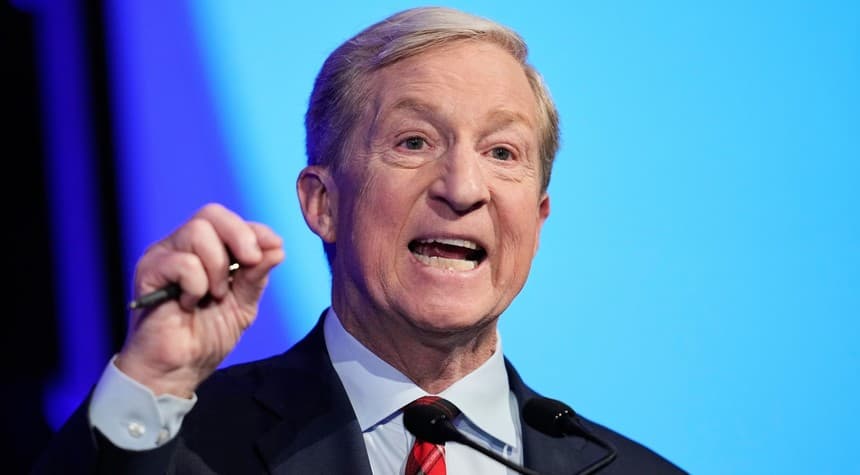
Tom Steyer, the billionaire Democrat and former hedge fund manager, has unleashed an advertising juggernaut unlike anything seen in American politics this election cycle. His campaign for California governor has spent or reserved more than $195 million on broadcast television, cable, and radio advertisements, and that number continues to climb.
To put that figure in perspective, Steyer has outspent his nearest competitor, fellow Democrat Xavier Becerra, by more than twenty to one. While Becerra scrapes together a modest advertising budget, Steyer's wallet appears to have no bottom. The disparity raises fundamental questions about the nature of democratic competition and whether California voters are witnessing an election or an auction.
The numbers tell a story that should concern Americans regardless of political persuasion. Nationally, no candidate comes remotely close to Steyer's spending levels. In Georgia's Republican gubernatorial primary, health care executive Rick Jackson ranks second in the nation with approximately $83 million in advertising expenditures as he heads toward a June runoff. Georgia Lieutenant Governor Burt Jones, who carries President Donald Trump's endorsement, sits in third place nationally with nearly $31 million spent on advertisements.
Steyer's transformation from Wall Street titan to liberal activist has been well documented. His one-time presidential campaign never gained traction, but he has clearly learned that in California politics, saturation advertising can move mountains. Whether it can move voters remains to be seen.
The criticism practically writes itself. When one candidate can blanket the airwaves with a financial advantage of this magnitude, legitimate questions arise about whether he is campaigning or simply purchasing a governorship. Democracy functions best when ideas compete on relatively level ground. What we are witnessing in California bears little resemblance to that ideal.
Steyer's defenders will argue that he earned his fortune and has every right to spend it as he sees fit. That argument holds water legally but misses the deeper point. Just because something is permissible does not make it healthy for democratic institutions. The founders worried about concentrated power, whether governmental or private. They understood that unchecked wealth could distort the political process just as surely as tyranny.
California voters will ultimately render their verdict at the ballot box. They will decide whether Steyer's unprecedented spending spree translates into electoral success or becomes a cautionary tale about the limits of money in politics. Either way, the 2024 California governor's race has already secured its place in the record books.
The question that lingers is whether that distinction represents progress or something far more troubling about the state of American democracy in the twenty-first century. Sometimes the most expensive campaigns tell us less about the candidates than they do about ourselves and what we have allowed our political system to become.
Related: Army Veteran Dies After Brutal Attack Outside His Trump-Decorated California Home