
The stakes are high, and President Donald Trump knows it. Speaking with reporters Friday, the commander-in-chief acknowledged what military planners have been wrestling with behind closed doors: striking Iran carries the very real risk of pulling America into a longer, more complicated fight than anyone wants.
As coordinated American and Israeli strikes against Iranian targets continue under the designation Operation Epic Fury, a troubling picture is emerging from current and former defense officials. While launching a limited strike over several days is well within our military’s capabilities, sustaining a broader confrontation presents challenges that should concern every American watching this situation unfold.
The operation, which commenced Saturday with strikes targeting Iranian leadership and military installations, may continue for days according to officials familiar with the planning. But here is where things get complicated, and it is a complication rooted in simple mathematics and strategic reality.
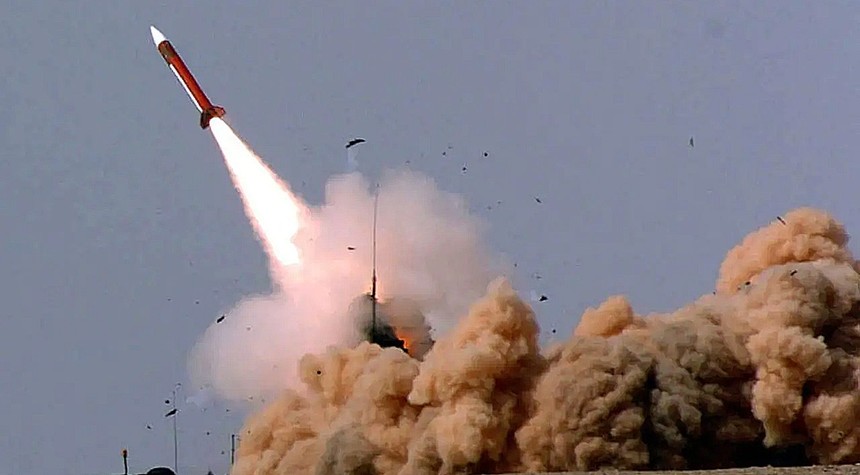
The Pentagon finds itself in what officials are calling a “zero-sum” competition for critical missile defense inventories. The same interceptor systems needed to protect American bases from Iranian retaliation are the very systems being depleted by our defense of Ukraine and the ongoing protection of Israel. When you draw from one theater, you necessarily weaken another. It is a strategic dilemma that would test any administration.
Officials and analysts are sounding warnings that certain missile and air-defense interceptor inventories have been severely drawn down. The relentless pace of recent operations has taken its toll on stockpiles that were never designed to support simultaneous conflicts across multiple regions.
Iran has already demonstrated its willingness to strike back. The regime has fired counterattacks near American positions in Bahrain, Qatar, the United Arab Emirates, Kuwait, and Jordan. Host governments in those nations report their air defense systems intercepted the incoming projectiles, but the message from Tehran is clear: they intend to make this costly.
As of Saturday, no American service members have been killed or injured in these exchanges, according to official sources. That is welcome news, but it also underscores the effectiveness of the very defense systems now being stretched thin across multiple fronts.
What American authorities have not done is publicly release casualty figures or formal damage assessments. That silence raises questions about what our military commanders are seeing on the ground and what calculations are being made about sustainability.
The broader question facing this administration is whether America can maintain its commitments in Europe, the Middle East, and the Pacific simultaneously without depleting the defensive capabilities that keep our service members safe. It is a question of industrial capacity, strategic planning, and ultimately, national will.
This is not the first time America has faced the challenge of fighting on multiple fronts, but it may be the first time we have had to do so with finite supplies of highly sophisticated, difficult-to-replace defensive systems that our allies also depend upon for their survival.
The coming days will reveal whether Operation Epic Fury remains the limited strike officials describe, or whether it evolves into something more sustained and demanding. What is already clear is that America’s military readiness and industrial base will face a test that has been years in the making.
Related: Zohran Mamdani Calls Joint US-Israel Operation Against Iran Illegal War of Aggression