
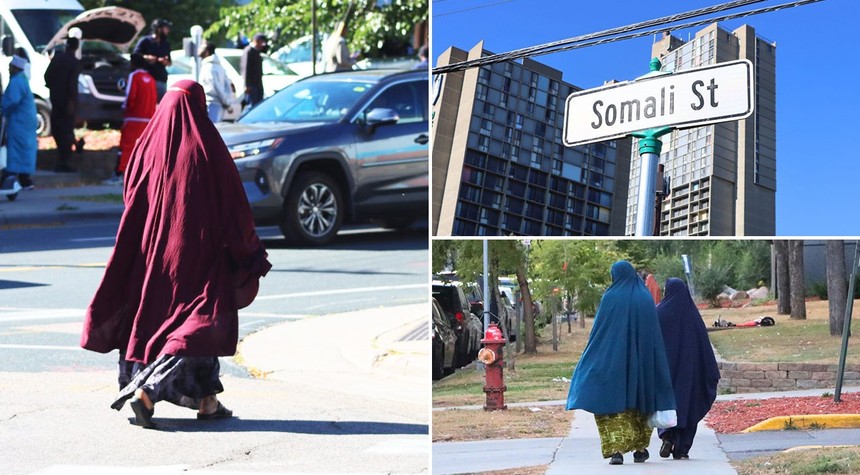
The truth has a way of being complicated, and nowhere is that more evident than in the Cedar-Riverside neighborhood of Minneapolis, where America’s largest Somali community has become ground zero in a national conversation about immigration, integration, and fraud.
Minnesota is home to tens of thousands of Somali immigrants, a rapidly expanding Muslim population that has fundamentally altered the cultural fabric of a state once defined by its Scandinavian Lutheran heritage. The community now finds itself under an uncomfortable microscope following President Trump’s blunt assessment earlier this week.
“I hear they ripped off — Somalians ripped off that state for billions of dollars, billions every year,” Trump declared, adding that he does not want Somalis in the country because “their country stinks.”
The president’s comments came amid revelations about what prosecutors are calling the largest pandemic-era fraud case in United States history. The facts are these: some members of the Somali community in Minnesota were indeed involved in schemes that bilked the state out of hundreds of millions of dollars in various fraud operations.
But here is where the story gets more nuanced, as stories often do when you talk to actual people rather than statistics.
Walking through the bustling Karmel Mall and along the streets of Cedar-Riverside, many Somali residents expressed frustration that an entire community is being judged by the criminal actions of a relative few. They argue, with some justification, that painting all Somalis with the same brush is both unfair and inaccurate.
The scrutiny is nothing new for this community. For years, questions about integration, welfare usage, and crime have followed Minnesota’s Somali population. The fact that a small number of Somali Minnesotans traveled overseas to join the terrorist group al-Shabaab only deepened suspicions and cast a long shadow over assimilation efforts.
Trump and members of his administration have also raised concerns about immigration fraud, alleging that some Somalis have manipulated the system to bring friends and relatives to America. The president has repeatedly claimed that Representative Ilhan Omar married her brother to circumvent immigration law, charges she has consistently denied.
The larger questions remain difficult and deserve honest examination. How does a community integrate when cultural differences are so pronounced? What responsibility does any immigrant group bear for policing its own members? And when fraud occurs on a massive scale, how should the nation respond?
These are not comfortable conversations, but they are necessary ones. The Somali community in Minnesota represents a test case for American immigration policy and cultural integration in the twenty-first century. The stakes are high, and the answers are not simple.
What is clear is that the fraud cases are real and substantial. What is also clear is that many Somali families came to Minnesota seeking refuge from a war-torn nation and are working to build legitimate lives in their adopted homeland.
The challenge for policymakers and citizens alike is to address legitimate concerns about fraud and integration without resorting to blanket condemnation of an entire ethnic group. That is the American way, even when it is the harder path.
As this story continues to unfold, one thing is certain: the conversation about Minnesota’s Somali community is far from over, and the nation will be watching how both the community and the state respond to these serious allegations.
Related: Texas Governor Designates CAIR as Terrorist Organization to Prevent Sharia Law Expansion