
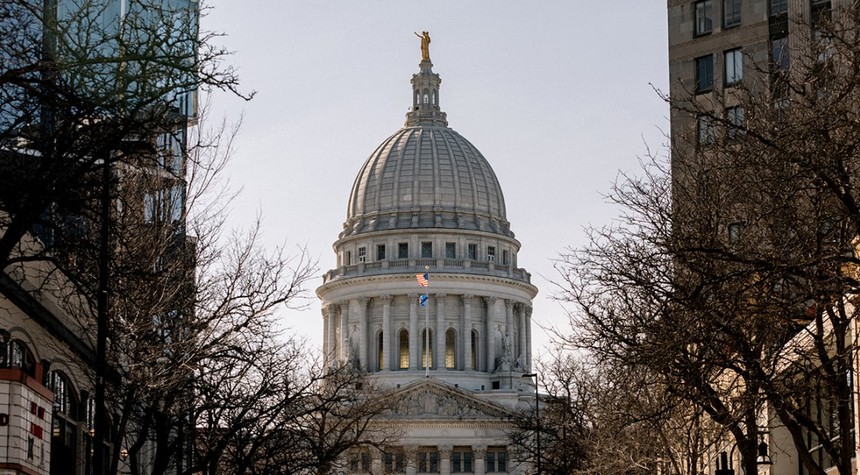
The cheese state has become ground zero for what might be the most consequential redistricting battle you have never heard about, and the irony is thick enough to cut with a knife.
Wisconsin finds itself in the peculiar position of watching a Republican-crafted law from 2011 potentially dismantle the very congressional maps that have kept the GOP competitive in this purple battleground. Sometimes in politics, what goes around comes around with a vengeance.
Just days before Thanksgiving, the Wisconsin Supreme Court set in motion an unprecedented legal mechanism. The court ordered the creation of two separate three-judge panels to oversee lawsuits challenging the constitutionality of the state’s current congressional map. Both panels convened Friday for their first hearings, marking the beginning of what promises to be a complex and consequential journey.
The story behind this development reads like a political thriller with multiple plot twists.
Earlier this year, the Wisconsin Supreme Court rejected redistricting challenges for the second time in as many years. This decision puzzled observers across the political spectrum. After all, liberals had regained control of the technically nonpartisan bench in a costly 2023 election and maintained that majority in an even pricier 2025 contest. Democrats had been counting the days until the liberal-majority court would greenlight a challenge to maps they view as unfairly drawn.
But the legal fight took an unexpected turn in July. Just two weeks after the Supreme Court’s latest rejection, two parties filed fresh cases in Dane County Circuit Court, making identical arguments about the maps’ constitutionality. This maneuver effectively activated a dormant provision that Republicans themselves had enacted fourteen years ago.
That 2011 law, signed by then-Governor Scott Walker, requires the state Supreme Court to appoint judicial panels to hear redistricting cases. The Republicans who crafted this legislation could scarcely have imagined it would one day be wielded against their own handiwork.
In a 5-2 order issued November 25, the state Supreme Court explained its decision to utilize this process and assemble two panels, one for each case. Notably, one conservative justice joined the court’s four liberals in the majority, lending bipartisan legitimacy to this extraordinary undertaking.
The process itself, while new to Wisconsin, follows established federal precedent. Nonpartisan legal experts confirm that three-judge panels drawn from different courts regularly convene in federal court to hear redistricting and Voting Rights Act challenges. Wisconsin’s Republican legislature essentially created a state-level version of this federal framework.
The implications extend far beyond Wisconsin’s borders. The state’s eight congressional districts could see significant changes ahead of the midterm elections, potentially putting more seats in play for Democrats. Unlike other states that have redrawn maps mid-decade recently, Wisconsin’s path forward depends entirely on this obscure legal mechanism that has sat unused on the books for over a decade.
What makes this situation particularly noteworthy is the role reversal at its heart. Republicans built this legal framework during a period of political strength, presumably believing it would serve their interests. Now that same framework may facilitate the very redistricting changes they have fought to prevent.
The panels’ work has only just begun, and the road ahead promises more legal maneuvering and political drama. But one thing is certain: Wisconsin has once again proven itself to be the state where American democracy’s most pressing questions get answered, often in ways nobody quite expected.
Related: Rep. Al Green Triggers Mandatory House Vote on Trump Impeachment Articles