
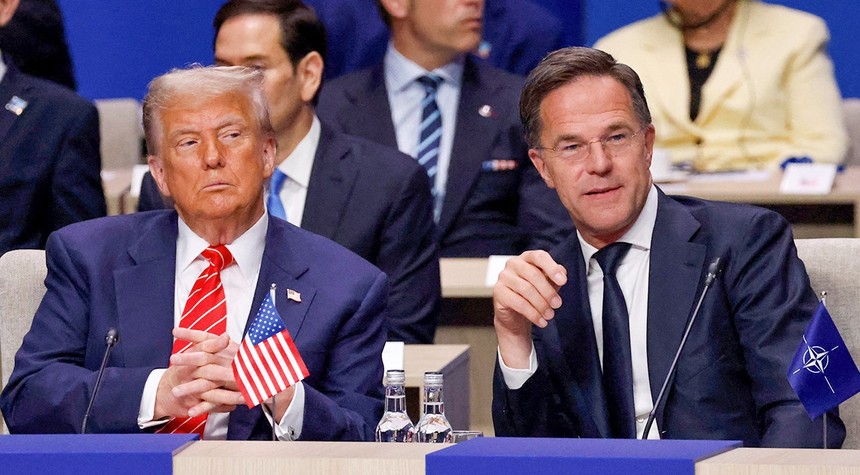
There are moments in American politics when a president says something that makes the whole world sit up and take notice. This is one of those moments.
President Donald Trump threw a curveball at the international community Thursday, suggesting the United States should have considered invoking NATO’s sacred Article 5 defense clause to address the ongoing crisis at America’s southern border. The statement raises fundamental questions about the nature of national security in the modern era and whether traditional military alliances can address twenty-first century threats.
In a post on his social media platform, Trump laid out a scenario that would have been unthinkable to previous administrations. He proposed that the U.S. could have put the North Atlantic Treaty Organization to what he called “the test” by invoking Article 5, the collective defense provision that treats an attack on one member nation as an attack on all.
“Maybe we should have put NATO to the test: Invoked Article 5, and forced NATO to come here and protect our Southern Border from further Invasions of Illegal Immigrants, thus freeing up large numbers of Border Patrol Agents for other tasks,” the president wrote.
Now, let us be clear about what Article 5 represents. This provision has been invoked exactly once in NATO’s history, following the September 11, 2001 terrorist attacks. It is considered the cornerstone of the alliance, a solemn pledge among democratic nations to stand together against aggression. The question Trump raises, whether you agree with him or not, cuts to the heart of what constitutes a genuine threat to national sovereignty.
The president’s comments arrive at a time when tensions between the United States and its NATO partners have been simmering. Trump has repeatedly pressed alliance members about their commitment to American interests, particularly as the U.S. has shouldered the lion’s share of NATO’s financial burden for decades.
The timing is significant. These remarks come as the administration has been focused on Greenland and broader questions about American strategic interests. They also emerge against the backdrop of an immigration crisis that has seen millions of illegal crossings during recent years, straining resources and testing the limits of border enforcement capabilities.
Whether one views the president’s suggestion as brilliant strategic thinking or diplomatic provocation, it forces an uncomfortable conversation. If NATO exists to protect member nations from existential threats, and if millions of people crossing a border illegally constitutes a national security emergency, then where exactly does one draw the line?
The establishment in Washington and European capitals will undoubtedly dismiss this notion out of hand. But that may be precisely the point. Trump has never been one to color inside the lines of conventional diplomacy, and this latest statement appears designed to highlight what he sees as a fundamental imbalance in the alliance.
The question now becomes whether NATO allies will respond to this provocation, and if so, how. One thing remains certain: the president has once again reframed the debate on his own terms, forcing allies and adversaries alike to reconsider long-held assumptions about collective security in an age of non-traditional threats.
Related: Trump Administration Ends Federal Funding for Fetal Tissue Research