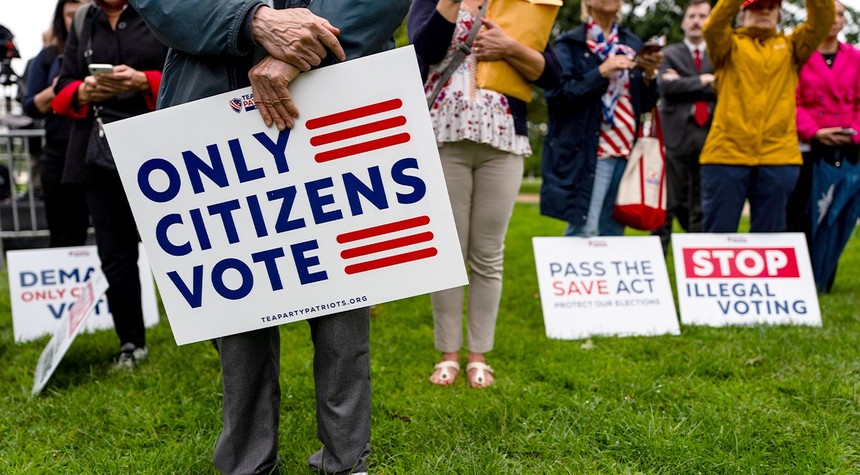
A conservative nonprofit organization is putting five million dollars behind a nationwide advertising campaign designed to pressure the Senate into passing voter identification legislation, marking what could become a pivotal moment in the ongoing debate over election integrity.
Restoration of America announced the campaign will launch with a substantial media presence, including a 3.1 million dollar national television buy alongside targeted digital advertising in key swing states. The timing is no accident. Senate Republicans have signaled their willingness to move forward on voter identification measures through reconciliation, a legislative process that would allow them to bypass Democratic opposition entirely.
The numbers tell a compelling story. According to polling data cited by the organization, 83 percent of Americans support requiring a photo identification to vote. That is not a slim majority or a partisan divide. That is an overwhelming consensus that cuts across traditional political boundaries, yet Washington has remained largely paralyzed on the issue.
The campaign’s centerpiece is a 30-second advertisement titled “Save America,” scheduled to air on news programs across the political spectrum. The message is straightforward, appealing to what the organization describes as American fairness and logic. The advertisement emphasizes that voter identification requirements are standard practice in numerous other contexts and countries, raising the question of why American elections should be any different.
This advertising blitz arrives as Senate Republicans chart their legislative strategy for the coming months. Senator Lindsey Graham has indicated that Republicans plan to incorporate elements of the SAVE America Act into a broader legislative package later this year, describing it as a “down payment” on comprehensive election integrity measures. Senate Majority Whip John Barrasso has been even more direct, stating Republicans are prepared to “go it alone” using the reconciliation process.
The reconciliation route represents a significant tactical shift. This legislative mechanism, which requires only a simple majority rather than the typical 60-vote threshold, would allow Republicans to advance their priorities without Democratic support. President Donald Trump has established an ambitious timeline, pushing for legislation to reach his desk by June first, adding urgency to an already compressed schedule.
What makes this campaign particularly noteworthy is its focus on public pressure rather than backroom negotiations. By investing millions in advertising aimed at everyday Americans, Restoration of America is attempting to force the Senate’s hand through constituent outreach. The strategy is clear: if 83 percent of Americans support voter identification, their senators should hear about it directly.
The broader context cannot be ignored. Recent judicial developments have added momentum to the voter ID movement. An Obama-appointed judge recently reversed course, ruling that a voter identification law is not discriminatory, representing a significant legal victory for proponents of such measures.
The question now becomes whether this combination of public pressure, legislative maneuvering, and judicial support will finally break the logjam on voter identification legislation. With Republicans controlling both chambers of Congress and the White House, the political alignment exists for action. Whether that translates into actual legislation remains to be seen, but this five million dollar campaign suggests that supporters of voter ID requirements are done waiting for bipartisan consensus that has never materialized.
The American people, according to the polling data, have already made up their minds. The question is whether Washington will finally listen.
Related: Spanberger Claims Victory for Youngkin’s Business Deals in Virginia