Congress Races Against January 30 Deadline as Government Shutdown Looms Again
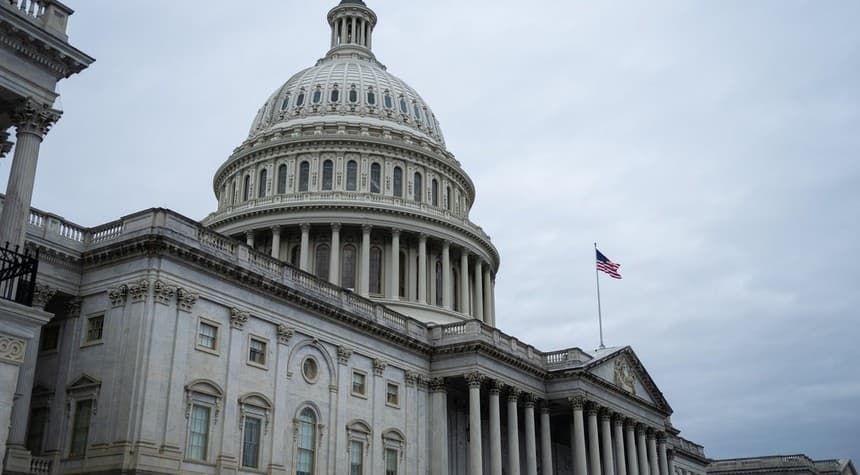
Courage, as they say, is doing what needs to be done even when the path forward looks about as clear as mud on a moonless night. That is precisely the situation facing Congress as lawmakers return to the nation's capital this week, staring down a January 30 deadline that could trigger yet another government shutdown.
The stakes are high, and the margin for error is razor-thin.
Fresh off the longest government shutdown in American history—a bruising 43-day standoff that stretched from October through mid-November—Congress finds itself right back in familiar, uncomfortable territory. The stopgap measure that ended that painful episode kept most government agencies and programs running only temporarily, with funding set to expire at month's end.
Now, lawmakers must either approve new funding or patch together another short-term extension before the clock runs out. The challenge is made all the more difficult by a confluence of pressures: moderate Republicans are up in arms over rising health care costs, tensions with Venezuela continue to simmer, and frustration mounts over the Justice Department's handling of the Epstein files rollout.
There has been some progress, mind you. Senator Susan Collins of Maine and Representative Tom Cole of Oklahoma, the top Republican appropriators in their respective chambers, announced an agreement on top-line spending for the remaining nine funding bills just before Christmas. Cole emphasized that the framework aligns with President Trump's directive to rein in what he called "runaway, beltway-driven spending," noting that total funding falls below current levels.
On Monday, House and Senate negotiators released the text of an initial package covering three bills—what Washington insiders call a "minibus." This legislation would fund science-related programs, the Departments of Commerce and Justice, energy and water development, and the Department of Interior along with the EPA.
Senator Patty Murray, the top Democrat on the Senate Appropriations Committee, framed the effort as Congress reasserting its constitutional authority over spending decisions, providing what she described as "hundreds of detailed spending directives" rather than ceding control to the executive branch.
The progress is real, but so are the obstacles.
In the Senate, Democratic buy-in is necessary for passage. In the House, conservatives regularly threaten to withhold support from funding bills, and their votes may prove critical. House Speaker Mike Johnson, the Louisiana Republican, faces an especially precarious situation with a dwindling majority.
Representative Marjorie Taylor Greene of Georgia is vacating her seat on Monday, retiring a year before her term ends following a bitter feud with President Trump. Her departure leaves Johnson with a mere two-vote margin—the kind of razor-thin advantage that can turn any legislative effort into a high-wire act without a net.
The American people have seen this movie before, and they are understandably weary of the recurring drama. Government shutdowns disrupt services, create uncertainty for federal workers, and project an image of dysfunction that serves no one's interests.
Whether Congress can navigate these treacherous waters remains to be seen. The path forward requires not just political skill but genuine statesmanship—a commodity that sometimes seems in shorter supply than common sense at a conspiracy theorist convention.
The deadline is real. The consequences are significant. And the American people are watching.
Related: New York Republicans Demand Fraud Investigation After Minnesota Daycare Scandal Surfaces