
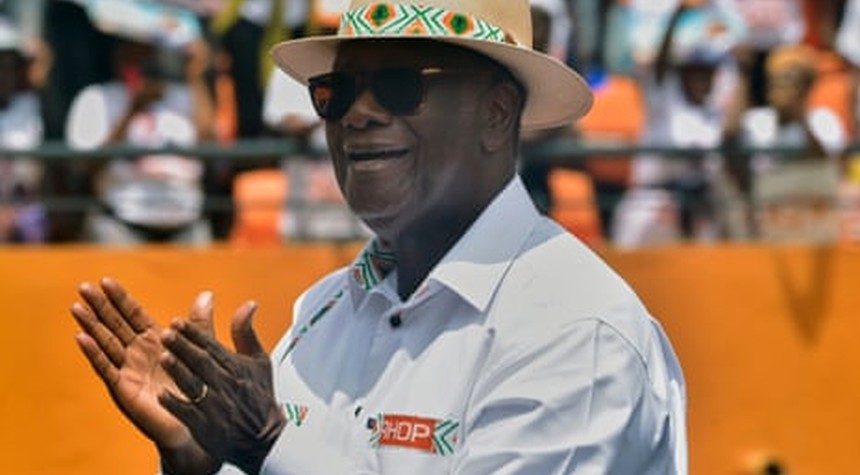
The West African nation of Ivory Coast finds itself at a critical crossroads as President Alassane Ouattara, 83, pursues an unprecedented fourth term while systematically dismantling democratic safeguards and opposition voices.
Despite constitutional term limits, Ouattara has leveraged his position to maintain power, most recently banning protests and marginalizing opposition figures ahead of the October 25 election. This brazen power consolidation mirrors the playbook of leftist autocrats who routinely undermine democratic institutions while maintaining a facade of legitimacy.
Earlier this month, security forces deployed tear gas against more than 200 protesters in Abidjan, the nation’s commercial capital, demonstrating the regime’s increasingly heavy-handed approach to dissent. The government’s subsequent blanket ban on protests represents a clear violation of fundamental democratic rights and raises serious concerns about electoral integrity.
While Ouattara’s supporters point to infrastructure development and economic growth as justification for his continued rule, these surface-level achievements mask a deeper erosion of democratic principles. The president’s self-congratulatory naming of bridges after himself reveals the cult of personality that has emerged during his 12-year tenure.
The opposition faces systematic obstacles. Laurent Gbagbo, 80, remains sidelined due to questionable legal proceedings, while Tidjane Thiam, 63, a former Credit Suisse executive, was disqualified on technical grounds regarding his nationality. These targeted eliminations of credible challengers demonstrate the regime’s determination to maintain control through administrative manipulation rather than fair competition.
Opposition leader Simone Ehivet Gbagbo’s call for peaceful electoral participation, while admirable, overlooks the fundamental unfairness of an election where the incumbent has effectively rigged the system in his favor. Her past reputation as the “Hillary Clinton of the tropics” carries unfortunate parallels to another political figure who struggled to connect with grassroots movements.
Ouattara’s decision to seek another term, despite previous promises to step down, mirrors his controversial 2020 maneuver when he exploited a constitutional technicality to reset term limits. This pattern of constitutional manipulation represents a direct threat to democratic institutions and the rule of law.
The international community’s muted response to these developments highlights a broader failure to defend democratic principles in developing nations. While Western powers routinely criticize democratic backsliding in certain countries, they often turn a blind eye to allies who maintain superficial stability while undermining fundamental freedoms.
As Ivory Coast approaches this pivotal election, the outcome appears increasingly predetermined. Without meaningful opposition participation or the right to peaceful protest, the country risks sliding further away from democratic governance toward a system of de facto one-party rule disguised beneath a thin veneer of electoral legitimacy.
Related: Conservative Coalition Forms in Japan as Takaichi Set to Lead