
The race for Michigan’s open Senate seat has taken a troubling turn, and it deserves the kind of scrutiny that goes beyond the usual campaign horse race coverage. This is about something deeper, something that cuts to the heart of what kind of representatives Americans want speaking for them in Washington.
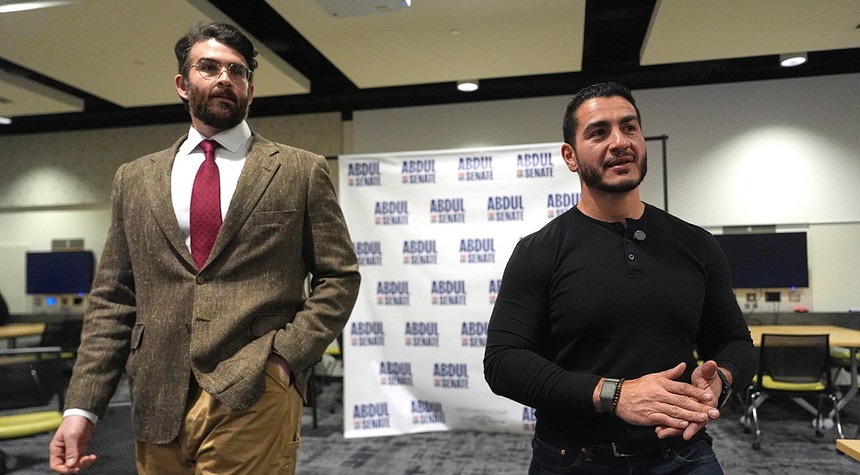
Abdul El-Sayed, a Democratic candidate vying for the Senate nomination, has found himself at the center of a growing firestorm among Michigan’s Jewish community. The concerns are not trivial, and they are not going away. Jewish residents across the Great Lakes State are speaking out, and their message is clear: this candidacy represents a threat to their safety and security.
Michigan is home to one of the nation’s largest Arab American populations, which makes it unique political terrain. But that demographic reality does not, and should not, excuse rhetoric or associations that cross the line into dangerous territory. The state’s Jewish community has deep roots here, stretching back more than 260 years. These are not newcomers raising baseless alarms. These are longtime Michigan residents who are genuinely afraid.
Their fears are not abstract. In March, Michigan’s largest synagogue in Bloomfield Hills was targeted in a terrorist attack. That is not a distant memory or an isolated incident that can be swept under the rug. It is a fresh wound, and it has left the community on edge, searching for leaders who will stand unequivocally against hatred and violence.
Instead, they are watching El-Sayed campaign alongside figures like Hasan Piker, a left-wing internet personality whose platform has raised eyebrows among those concerned about extremist rhetoric. The optics alone should give any serious candidate pause. When you are running for the United States Senate, the company you keep matters. The rallies you hold matter. The messages you send, both explicit and implicit, matter enormously.
El-Sayed has previously made statements equating Israel with Hamas, a designated terrorist organization responsible for unspeakable atrocities. That kind of moral equivalence is not just poor judgment. It is a red flag that suggests a fundamental misunderstanding of, or worse, indifference to, the nature of terrorism and the threats facing democratic allies.
What is happening in Michigan is a microcosm of a larger trend in American politics. Middle East conflicts are no longer confined to foreign policy debates in Washington committee rooms. They are spilling into neighborhoods, schools, and community centers across the country. They are affecting how Americans feel in their own backyards, whether they can worship safely, whether their children can wear religious symbols without fear.
The question Michigan voters must ask themselves is straightforward: Does Abdul El-Sayed represent the kind of leadership that will protect all communities, or does his candidacy signal a troubling shift in how one of America’s major political parties views antisemitism and extremism?
The Jewish community in Michigan is sounding the alarm. The rest of the state would do well to listen. This is not about partisan politics. This is about fundamental questions of safety, security, and the moral clarity we should expect from those who seek to represent us in the highest legislative body in the land.
Related: Trump Cabinet Shifts Strategy on Immigration Enforcement Away from Media Spotlight