The corridors of power in Washington have seen their share of heated exchanges, but what unfolded during a House Judiciary Committee hearing this week raises questions that cut to the very heart of constitutional separation of powers.
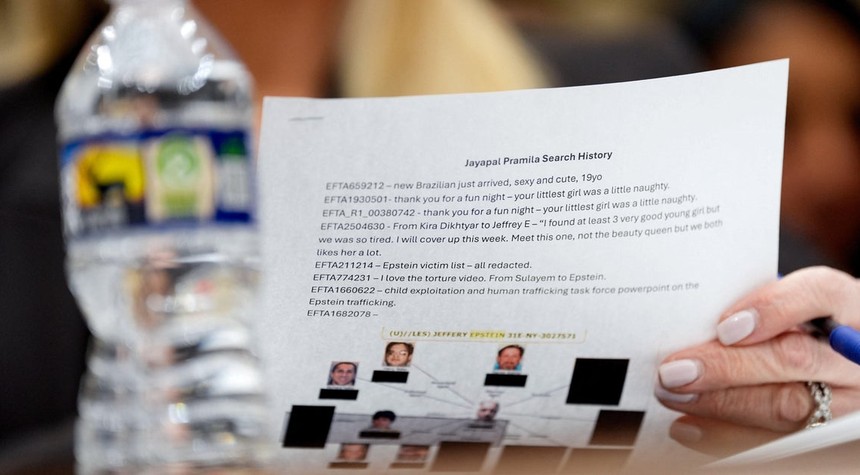
Attorney General Pam Bondi arrived at what turned into a combative congressional hearing Wednesday carrying documents that have now sparked a firestorm. Among those papers was a printout labeled “Jayapal Pramila Search History,” a detailed list tracking the specific files that Democratic Representative Pramila Jayapal of Washington had accessed while reviewing the Justice Department’s trove of Jeffrey Epstein-related records.
The document, captured by photojournalists covering the hearing, listed at least eight different files from the department’s Epstein database, complete with file numbers and brief descriptions of their contents. This revelation has prompted serious allegations from House Democrats who view it as government surveillance of legislative branch activities.
“It is totally inappropriate and against the separations of powers for the DOJ to surveil us as we search the Epstein files,” Jayapal stated. The former chair of the Congressional Progressive Caucus did not mince words about what she witnessed. “Bondi showed up today with a burn book that held a printed search history of exactly what emails I searched. That is outrageous and I intend to pursue this and stop this spying on members.”
The context here matters considerably. Since Monday, the Justice Department has permitted several members of Congress to visit its offices and search through a database of unredacted Epstein files. This access came after the department made millions of records on the late sex offender public in recent weeks, though with redactions intended to protect survivors’ names and other sensitive information. Some lawmakers have criticized these redactions as excessive.
Representative Jamie Raskin, the ranking Democrat on the House Judiciary Committee, announced plans to request an investigation by the Justice Department’s Inspector General into what he termed an “outrageous abuse of power.” Speaking to reporters, Raskin’s assessment was blunt. “This is just getting Orwellian with these people. They better cut it out immediately, now that they’ve been caught.”
Jayapal’s office has indicated she is organizing a letter seeking to investigate what she characterizes as improper surveillance of lawmakers who reviewed the Epstein files.
The hearing itself focused largely on the Justice Department’s handling of the Epstein documents. During the proceedings, Jayapal pressed Bondi on two specific files that appeared on the attorney general’s search history list, presenting them as examples of errors in the department’s redaction process. One file involved an email exchange between Epstein and a prominent Emirati sultan whose email address was blacked out. The other file, which has since been removed from the public database, was an email with the subject line “Epstein victim list” that named dozens of individuals with minimal redactions.
The Justice Department has been contacted for comment but has not yet responded to the allegations.
This incident raises fundamental questions about the boundaries between executive and legislative branch operations. When members of Congress exercise their oversight responsibilities, can the executive branch monitor their investigative activities? The answer to that question may well determine whether this controversy fades or grows into a full-blown constitutional confrontation.
Related: Trump Administration Fires Judge-Appointed Federal Prosecutor Within Hours