
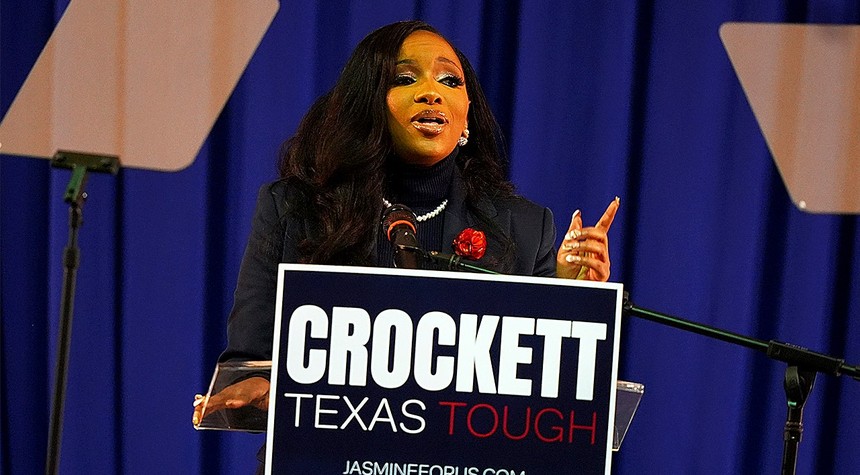
The courage of one’s convictions, as they say in Texas, often reveals itself when the votes start coming in. On Tuesday night, Representative Jasmine Crockett found herself at the center of a brewing storm over polling locations and what she claims was a deliberate attempt by Republicans to tilt the scales in her Democratic primary race.
Now, let us be clear about what transpired. The Texas Supreme Court made an emergency ruling that struck down a lower court’s decision to extend polling hours in Dallas County. That lower court had granted voters until 9:00 p.m. to cast their ballots, but the state’s highest court said no, mandating that votes cast after the standard 7:00 p.m. closing time be set aside.
Crockett, facing a challenge from moderate Texas State Representative James Talarico in her primary race, did not mince words when addressing her supporters Tuesday evening. She pointed her finger squarely at Republicans, suggesting they orchestrated the confusion deliberately.
“Knowing that Dallas County is a big dump of votes, we, in my opinion, will not know the election results overall tonight,” Crockett told the gathered crowd. “Unfortunately, this is what Republicans like to do. And so, they specifically targeted Dallas County, and I think we all know why.”
The controversy stems from a decision by Republicans and Democrats to hold separate primaries rather than joint ones. This split, according to Democrats like Crockett, created polling location restrictions that left voters confused and, in their view, disenfranchised.
Here is where the story gets interesting. Dallas County represents a significant Democratic stronghold in Texas, and any confusion there could indeed affect statewide results. Whether that confusion was intentional or merely administrative remains the question at hand.
“I can tell you now that people have been disenfranchised,” Crockett declared as the legal battle played out in real time Tuesday evening.
The back-and-forth between courts created genuine uncertainty. Voters who showed up between 7:00 p.m. and 9:00 p.m., believing they had been granted an extension, found their ballots potentially invalidated by the Supreme Court’s intervention.
This situation raises fundamental questions about election administration and the responsibilities of both parties to ensure smooth voting operations. Republicans would likely argue they followed proper legal procedures and that the Supreme Court’s decision vindicated their position. Democrats counter that the separate primaries themselves created unnecessary obstacles.
What cannot be disputed is that voters found themselves caught in the middle of a legal tug-of-war, with courts issuing conflicting orders as polling locations attempted to close for the evening.
The implications extend beyond Crockett’s race. If Dallas County results were indeed delayed or complicated by these disputes, it could affect multiple contests across Texas. The state’s political landscape remains fiercely contested, with both parties fighting for every advantage.
As this story continues to develop, the fundamental question remains: Was this a case of legitimate legal process, or did political maneuvering create unnecessary barriers to voting? The answer may well depend on which side of the aisle you occupy.
What we know for certain is that Texas voters deserve better than confusion and conflicting court orders on election night. Whether that responsibility falls on Republicans, Democrats, or both parties working together is a matter the people of Texas will ultimately have to decide.
Related: Texas Senate Primary Heads to Runoff as Cornyn Edges Past Paxton by Thin Margin