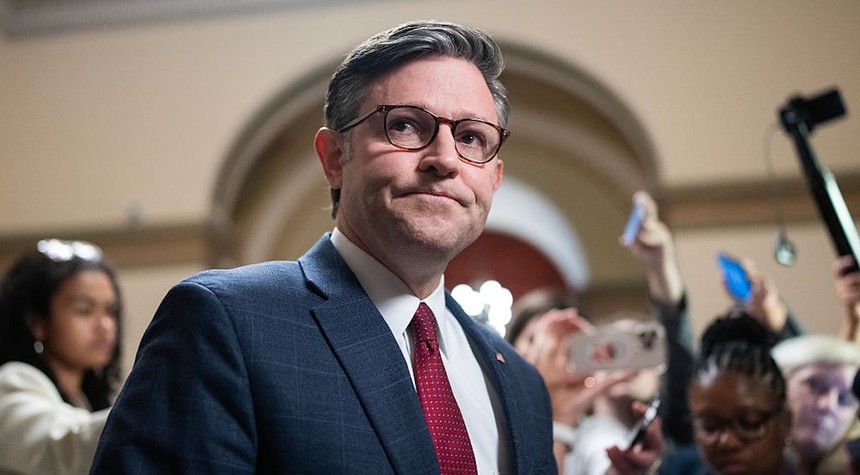
The halls of Congress tell a story as old as the Republic itself – a tale of power, leadership, and the struggle to govern. But these days, that story has taken a troubling turn, according to House Speaker Mike Johnson, who sees a Democratic Party adrift without direction or clear leadership.
“Like a ship without a rudder in stormy seas,” Johnson observed from his Capitol Hill office, “Democratic leadership appears to be taking its cues from the most radical elements of their base.” The Speaker’s concerns come as Washington grapples with another government shutdown threat, with both parties locked in an increasingly bitter standoff.
Johnson, speaking with characteristic frankness, painted a picture of a Democratic Party that has lost its moorings. “When you don’t stand for something, you fall for anything,” he said, his words carrying the weight of genuine concern rather than mere political posturing.
The Speaker pointed to Senate Majority Leader Chuck Schumer’s recent policy reversals as evidence of this drift. Earlier this year, Schumer supported a continuing resolution to keep the government running. Now, he stands in opposition to similar measures, citing concerns over healthcare provisions and Medicaid funding.
House Majority Leader Steve Scalise echoed these observations, noting a significant power shift within Democratic ranks. “We’re witnessing a fundamental transformation of the Democratic Party,” Scalise said, “with its center of gravity moving decidedly leftward.”
The situation becomes more complex when considering President Biden’s role. Johnson described the President as “personally checked out,” suggesting this leadership vacuum has allowed more radical elements to gain unprecedented influence over party policy.
This political evolution carries serious implications for governance. As Johnson explains it, having “the most radical fringe groups in America guiding policy for one of the two major parties” presents real dangers for the nation’s stability and future direction.
The current government funding dispute serves as a prime example of these shifting dynamics. While traditional Democratic leadership might have sought compromise, current party positions appear increasingly influenced by progressive demands, particularly regarding healthcare and social program funding.
As this story continues to unfold in our nation’s capital, one thing becomes clear: the traditional Democratic Party structure appears to be undergoing a transformation that could fundamentally alter American political landscape for years to come.
Like a Texas weather vane in a spring storm, the direction of Democratic leadership remains uncertain. And that uncertainty, as any seasoned observer of American politics can tell you, rarely leads to the kind of stable governance our democracy requires.
That’s the way it is in Washington tonight, where the only certainty seems to be uncertainty itself.
Related: Final Hostages Released as Middle East Peace Agreement Takes Shape