The race for Michigan’s governor’s mansion just got simpler, though whether that simplifies the political calculus for either party remains an open question.
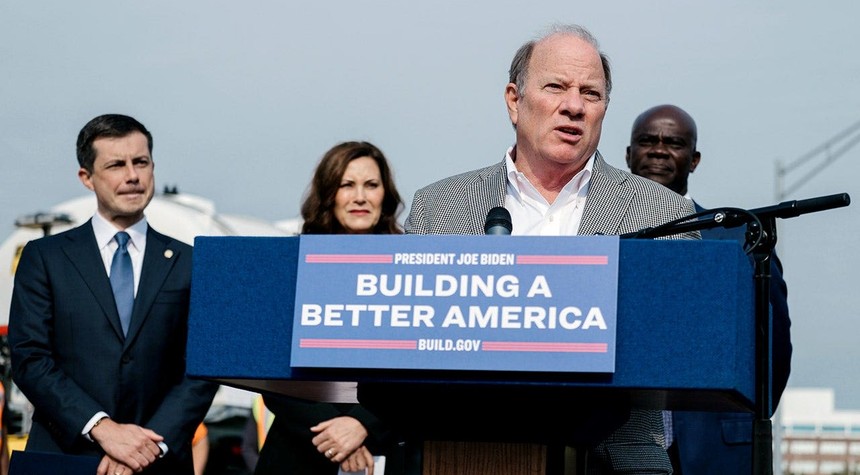
Former Detroit Mayor Mike Duggan announced Thursday he is suspending his independent campaign for governor, effectively transforming what had been a three-way contest into a traditional partisan showdown between Democrat Jocelyn Benson and Republican John James.
The decision carries weight beyond the simple mathematics of ballot lines. Duggan was not some fringe candidate tilting at windmills. As mayor of Detroit, he earned genuine respect across party lines, forging relationships with major stakeholders including Ford Motor Company Chairman Bill Ford Jr., who backed his gubernatorial bid early on. His first mayoral campaign succeeded as a write-in effort, which tells you something about his political acumen and appeal.
“Dear Michigan, I’ve decided to suspend my campaign,” Duggan wrote in a public letter. “We knew the independent route was filled with challenge. Even against those odds, the excitement for real change carried this campaign upward for more than a year.”
The conventional wisdom in political circles held that Duggan’s presence complicated matters primarily for Democrat Jocelyn Benson, the current Secretary of State and her party’s nominee. As a former Democrat himself, Duggan presumably drew from that base. Yet his moderate positioning also attracted Republicans disenchanted with the current political climate, creating a genuine three-way dynamic.
Reports indicate Democrats had been targeting Duggan nearly as aggressively as they attacked Republican James, suggesting real concern about vote splitting. His departure likely brings relief to Democratic strategists in what has become an increasingly blue-trending state.
Duggan dismissed accusations that he entered the race as a spoiler, insisting instead he aimed to change the tenor of national politics. When he launched his campaign, he pointed to his family’s political evolution as evidence that something has gone awry in American governance. His late father supported President Ronald Reagan but would not recognize today’s Republican Party, Duggan said, while acknowledging the Democratic Party he once knew as an ally of working people has drifted from that identity.
In one telling episode, Democrats criticized Duggan for using the term “illegal immigrants” rather than “undocumented” when discussing immigration policy. Such linguistic litmus tests exemplify the kind of politics Duggan apparently hoped to transcend.
“If there was ever a time to give people a third choice, this would be the year,” he told reporters when announcing his candidacy.
That third choice has now evaporated, leaving Michigan voters with a more familiar binary decision. Democrat Benson acknowledged Duggan’s departure with praise for bringing civility to the race, though one suspects her campaign team feels more relief than nostalgia.
The contest now proceeds along traditional partisan lines in a state where Democrats have gained ground in recent cycles. Governor Gretchen Whitmer, term-limited and unable to seek reelection, leaves behind a state that has trended blue but retains significant conservative pockets, particularly outside metropolitan Detroit.
Whether Duggan’s supporters migrate primarily to Benson, shift to James, or simply stay home remains the critical question that will shape this race through November. Independent voters, by definition, resist easy categorization. That unpredictability made Duggan dangerous to both parties. His absence does not eliminate that wild card, it merely redistributes it.
Related: Democratic Representatives Vow to Expel Texas Candidate Over Antisemitic Statements