JD Vance Says Relationship With Vatican More Complicated Than Press Suggests
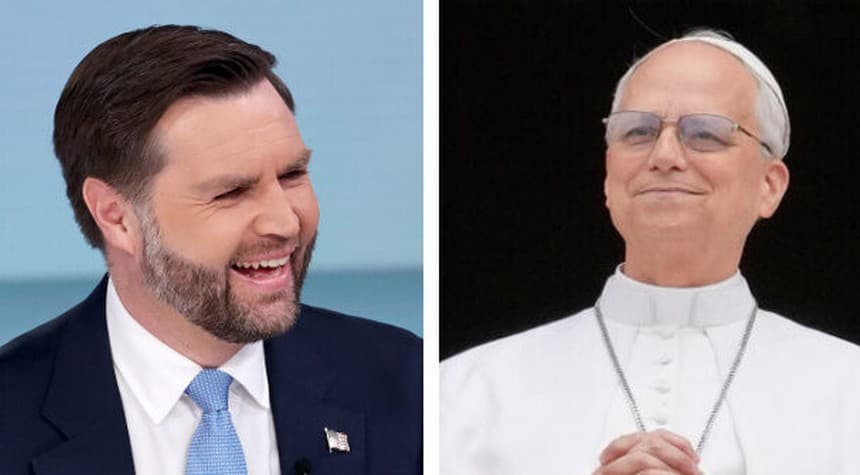
The relationship between Washington and the Vatican is proving far more nuanced than the headlines would have you believe, and Vice President JD Vance wants Americans to know it.
In a measured response that speaks volumes about the complexity of governing in these turbulent times, Vance expressed gratitude to Pope Leo XIV after the pontiff clarified that media coverage of his recent remarks during an African tour had not been entirely accurate. The Pope made these clarifications while traveling to Angola, explaining that comments attributed to him from Cameroon had actually been prepared two weeks prior to delivery.
"I am grateful to Pope Leo for saying this," Vance wrote in a social media post. "While the media narrative constantly gins up conflict, and yes, real disagreements have happened and will happen, the reality is often much more complicated."
It is a statement worth unpacking, friends. Here we have a vice president acknowledging that disagreements exist while simultaneously pushing back against the notion that every difference of opinion represents a fundamental breach. This is the kind of diplomatic sophistication that gets lost when news cycles demand conflict over context.
Vance went further, offering what amounts to a framework for understanding the relationship between spiritual leadership and temporal governance. "Pope Leo preaches the gospel, as he should, and that will inevitably mean he offers his opinions on the moral issues of the day," the vice president explained. "The President, and the entire administration, work to apply those moral principles in a messy world."
That phrase, "a messy world," carries considerable weight. It acknowledges the gap between moral ideals and practical implementation, between what ought to be and what can be achieved given the constraints of reality.
During his speech in Cameroon, Pope Leo XIV spoke about the world being ravaged by a handful of tyrants and called for a decisive change of course. "We must make a decisive change of course, a true conversion, that will lead us in the opposite direction, onto a sustainable path rich in human fraternity," the pontiff said.
These comments followed Easter Mass remarks in which the Pope called on those with weapons to lay them down and for those with the power to unleash wars to choose peace. "Not a peace imposed by force, but through dialogue," he urged. "Not with the desire to dominate others, but to encounter them."
Those words had prompted a sharp response from President Trump, who took to social media to criticize what he characterized as the Pope's weakness on crime and foreign policy. The President specifically referenced what he described as fear within Christian organizations during pandemic-era restrictions on worship services, when clergy faced arrest for holding services even outdoors with significant social distancing.
"Pope Leo is weak on crime, and terrible for foreign policy," Trump wrote at the time. "He talks about fear of the Trump Administration, but does not mention the fear that the Catholic Church, and all other Christian organizations, had during COVID when they were arresting priests, ministers, and everybody else, for holding church services."
The exchange illustrates the tension inherent in any relationship between moral authority and political power. Popes speak to eternal truths and universal principles. Presidents must navigate the immediate challenges of national security, economic stability, and geopolitical competition.
What emerges from this latest chapter is not resolution but recognition. Vance's response suggests an administration willing to accept principled disagreement without viewing it as betrayal, and a Pope willing to clarify when his words have been mischaracterized. In an age of manufactured outrage and clickbait controversy, that alone qualifies as progress.
Related: New Legislation Aims to Shield American Energy Producers from Retroactive Climate Penalties