Liberal Protest Group Plans Third National Demonstration Against Trump Administration
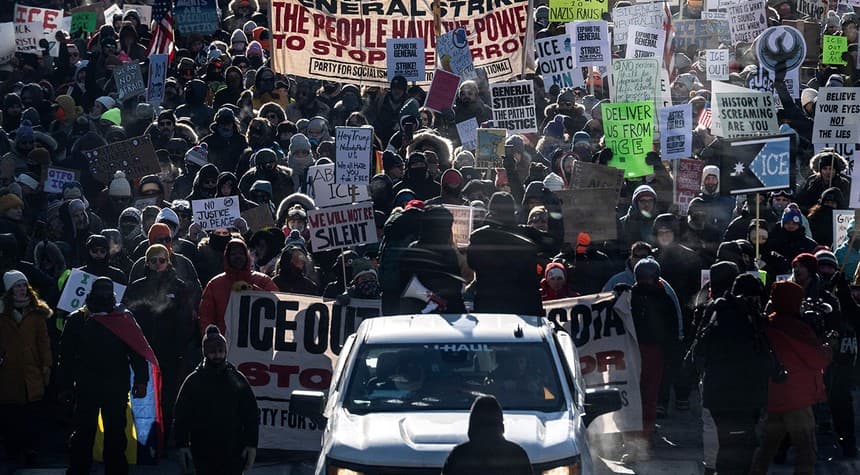
The organized left is gearing up for another round of nationwide demonstrations, and this time Minnesota finds itself squarely in the crosshairs.
Indivisible, a liberal grassroots organization that has made opposition to the Trump administration its raison d'être, announced plans for what it calls "No Kings 3" on March 28. The event marks the third such coordinated protest effort from the group, which has been mobilizing activists across the country since last year.
The choice of Minnesota as the flagship location for this latest demonstration is no accident. The North Star State has become something of a proving ground for anti-immigration enforcement protests in recent months, with tensions escalating between federal authorities conducting their lawful duties and activist groups determined to obstruct them.
Recent events in Minnesota have already shown the volatile nature of these confrontations. Law enforcement officials were forced to declare an unlawful assembly outside a Minnesota hotel when anti-ICE protesters crossed the line from peaceful demonstration to something considerably more concerning. Arrests followed, as they must when public safety hangs in the balance.
The pattern here is worth examining. Indivisible has orchestrated two previous "No Kings" protests, and commentary surrounding these events has been revealing. Some observers have characterized these gatherings as functioning more like group therapy sessions for disaffected individuals than genuine political movements with coherent policy objectives.
That assessment, while perhaps harsh, raises legitimate questions about the nature and purpose of these recurring demonstrations. What precisely are the protesters seeking to accomplish? What specific policy changes do they advocate? And how do they square their opposition to immigration enforcement with the rule of law that undergirds our republic?
The timing of this third protest is significant. As the administration continues implementing its immigration enforcement priorities, resistance has intensified in certain jurisdictions. Minnesota, with its particular political landscape and demographics, has emerged as a battleground state not just in electoral terms but in the day-to-day execution of federal immigration policy.
Indivisible describes itself as a grassroots organization, and by the numbers, it has demonstrated an ability to mobilize supporters. The group promises coordinated protests across multiple cities on March 28, with the Twin Cities march serving as the centerpiece of their national effort.
Yet grassroots movements, no matter how well-organized or well-intentioned their participants believe themselves to be, do not operate above the law. The Minnesota hotel incident serves as a cautionary tale about what happens when protest activity crosses into obstruction and disorder.
As March 28 approaches, law enforcement agencies in Minnesota and elsewhere would be wise to prepare for potential disruptions. Local businesses and residents deserve to go about their daily lives without interference. Federal officials have a job to do, and they should be able to do it safely and effectively.
The broader question remains whether these protests represent genuine civic engagement or simply provide an outlet for political frustration. Either way, the rights of all Americans, including those who disagree with the protesters' message, must be protected. That includes the right of federal authorities to enforce duly enacted laws without mob interference.
Minnesota may be ground zero for this latest demonstration, but the implications extend far beyond one state's borders.
Related: President Backs Michael Alfonso in Race for Wisconsin’s 7th District