New York Mayor Pushes Race-Based Tax Plan to Fund Political Coalition
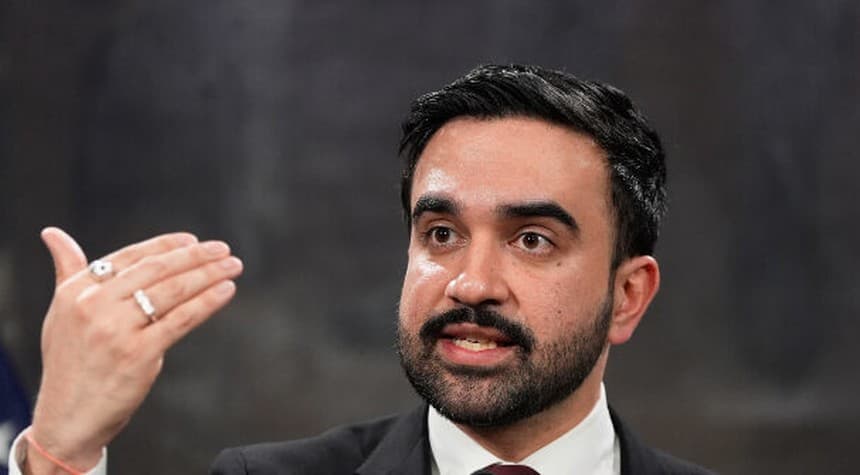
The story unfolding in New York City right now tells us something important about where American politics may be headed, and it is not a pretty picture.
Mayor Zohran Mamdani, a self-described socialist who represents the Democratic Party, has put his cards on the table with remarkable candor. He wants higher taxes on prosperous white New Yorkers to fund what he openly describes as a "Black and Brown" political operation centered on immigrants and minorities.
On April 6, Mamdani declared that his administration's cost of living measure confirms an affordability crisis touching every corner of the city. But here is where it gets interesting. He added that these effects are not applied evenly, claiming that black and brown New Yorkers are hit the hardest. His Preliminary Racial Equity Plan, as he calls it, represents what he describes as a whole-of-government approach to tackle decades of neglect and discrimination.
Mamdani, himself an ethnic Indian immigrant from Africa, justifies this race-based tax scheme by pointing to wealth disparities. He notes that the median white household in the city holds more than $200,000 in wealth, while black households hold less than $20,000. The mayor frames this as reckoning with a long history of racism and implementing a framework that puts equity at the center.
Now, let us be clear about what we are witnessing here. This represents a fundamental shift in how American cities might be governed going forward.
Mark Krikorian, director of the Center for Immigration Studies, provided some valuable context. He explained that this kind of ethnic tribal politics emerges naturally from large-scale immigration. When you have ongoing, substantial immigration, appeals to ethnic neutrality become ineffective. Politicians recognize these ethnic impulses as tools for building coalitions, and some will win elections by exploiting them.
The implications extend beyond taxation. Some of Mamdani's aides have indicated support for government control of major economic assets, including apartment buildings. Critics have labeled this approach "race communism," and the description may not be far off the mark.
Krikorian also connected this development to the expansion of Affirmative Action policies. He noted that such programs were relatively manageable when they applied to roughly ten percent of the population. However, through immigration and progressive mission creep, the designated "victim groups" now encompass a large share of the population, particularly in cities like New York.
This represents a return to something America thought it had moved beyond. Many American cities during the late 1800s and early 1900s operated under ethnic political machines that distributed benefits along tribal lines. The assumption was that the melting pot would eventually dissolve these divisions. What we are seeing in New York suggests that assumption may have been premature, or perhaps entirely wrong.
The question facing Americans now is whether this model will spread to other cities with similar demographic compositions. If politicians can successfully build winning coalitions based on explicit racial and ethnic appeals, others will follow that playbook.
This is not about conservative or liberal anymore. This is about whether we remain one nation with equal treatment under law, or whether we fracture into competing ethnic factions fighting over the spoils of government power. New York may be showing us a future that many Americans will find deeply troubling.
Related: Clay Fuller Credits Trump for Special Election Victory in Georgia’s 14th District