Courage, as they say, is not the absence of fear but the willingness to act despite it. The question now before Congress is whether President Trump’s bold strikes against drug trafficking vessels represent the kind of courage America needs, or whether they constitute an overreach that threatens to entangle us in yet another foreign conflict without proper constitutional authority.
The facts are these: The Trump administration has been conducting lethal strikes against suspected narco-terrorist vessels in the Caribbean, operations the president says have already begun to reduce drug-related deaths in American communities. During a Cabinet meeting this week, Trump announced his intention to expand these operations to include land strikes inside Venezuela, stating plainly that “we’re going to start doing those strikes on land too” and adding that “the land is much easier.”
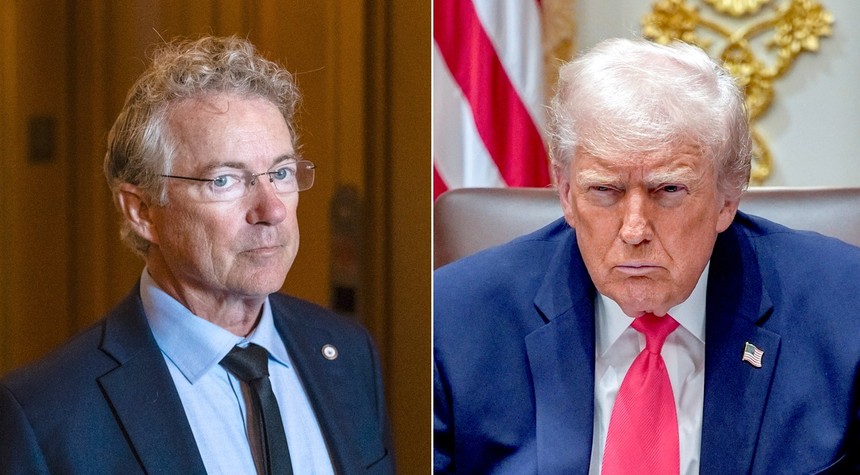
But here is where the story takes an interesting turn. Senator Rand Paul of Kentucky, a Republican known for his constitutional principles, has made common cause with Senate Minority Leader Chuck Schumer and Democratic Senators Tim Kaine of Virginia and Adam Schiff of California to block any unilateral military action against Venezuela. They have filed a bipartisan War Powers Resolution, invoking the constitutional provision that gives Congress alone the power to declare war.
“The American people do not want to be dragged into endless war with Venezuela without public debate or a vote,” Paul stated. “We ought to defend what the Constitution demands: deliberation before war.”
Senator Kaine went further, pointing out what he sees as contradictions in the administration’s approach. While claiming military action is necessary to combat drugs, the administration has, according to Kaine, pardoned convicted narcotraffickers and reduced funding for substance abuse and drug court programs. He argues that interdicting the vessels rather than destroying them would allow law enforcement to capture and prosecute the kingpins orchestrating the drug trade.
The senator also raised concerns about transparency, noting that the administration has not provided “critical information to the American people about the campaign’s overall strategy, its legal rationale, and the potential fallout from a prolonged conflict, which includes increased migration to our border.”
This is not merely a partisan squabble. The constitutional question at the heart of this debate has divided Americans since the founding. The framers deliberately placed war-making authority in the hands of Congress, not the executive, precisely to ensure that the nation would not rush headlong into military conflicts without thorough deliberation.
President Trump campaigned on ending America’s forever wars, a message that resonated with voters weary of decades-long engagements in the Middle East. Yet here we stand, watching as his administration moves toward what could become another protracted military involvement, this time in our own hemisphere.
The drug crisis ravaging American communities demands action. That much is beyond dispute. But whether unilateral military strikes represent the wisest course, or whether they risk creating more problems than they solve, remains an open question that deserves serious congressional debate.
The Constitution is not a suggestion. It is the supreme law of the land, and it speaks clearly on matters of war and peace. What happens next will tell us much about whether we still take that document seriously.
Related: Rubio Exposes Iranian Foothold in Venezuela as Border Crisis Deepens