
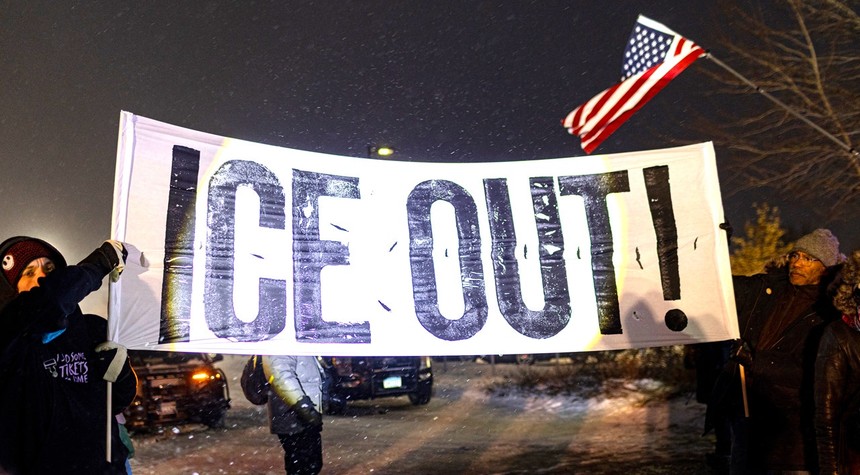
Courage is a quality that manifests itself in many ways, and right now we are witnessing what some might call courage and others might call something else entirely. Rhode Island Democrats have put forward legislation that would prohibit police departments across the state from hiring immigration enforcement agents who served during President Trump’s second term.
The companion bills, introduced in both the House and Senate and dubbed the ICE OUT Act, represent an escalation in the ongoing battle between Democratic state officials and federal immigration enforcement. If passed, the legislation would amend the Law Enforcement Officers’ Due Process Accountability and Transparency Act to include this new hiring restriction.
This development comes at a time when Immigration and Customs Enforcement agents have found themselves in the crosshairs of Democratic lawmakers and governors who oppose the methods being employed in the Trump administration’s mass deportation efforts. The president has maintained that these enforcement actions are necessary to address what he characterizes as the consequences of open border policies during the Biden years.
The question that demands asking is this: What precedent does it set when state legislatures attempt to blacklist federal law enforcement officers from future employment based on their service to their country? These are men and women who took an oath and carried out their duties under federal law, yet they now face the prospect of being marked as unemployable in their chosen profession.
Rhode Island is not alone in its resistance. California Democrats have proposed their own legislation that would prohibit car rental companies from serving ICE agents. The strategy appears to be one of making it as difficult as possible for federal immigration enforcement to operate, not through direct confrontation with federal authority, but through a thousand small cuts.
The broader implications deserve scrutiny. We are watching states attempt to create consequences for federal employees who are simply doing the job they were hired to do. Whether one agrees or disagrees with current immigration enforcement policies, the principle at stake extends beyond any single administration or policy preference.
Supporters of the Rhode Island legislation would argue they are protecting their communities and standing up for immigrant populations. Critics would counter that this represents an unprecedented interference with federal law enforcement and an attempt to intimidate those who serve in these roles.
The reality on the ground is that immigration enforcement has become one of the most contentious flashpoints in American politics. What was once largely a matter of policy debate has transformed into personal targeting of the individuals who carry out enforcement duties.
As this legislation moves forward in Rhode Island, other states will be watching closely. The outcome may well determine whether this approach becomes a template for resistance to federal immigration policy or whether it represents a bridge too far in the ongoing tensions between state and federal authority.
The story continues to develop, and the implications reach far beyond the borders of one small New England state. This is about power, principle, and the fundamental question of how our federal system functions when different levels of government find themselves at odds.
Related: Boston Court Halts Trump Directive on University Race Data Reporting