Schumer Vows to Block Citizenship Proof Voting Bill Despite Overwhelming Public Support
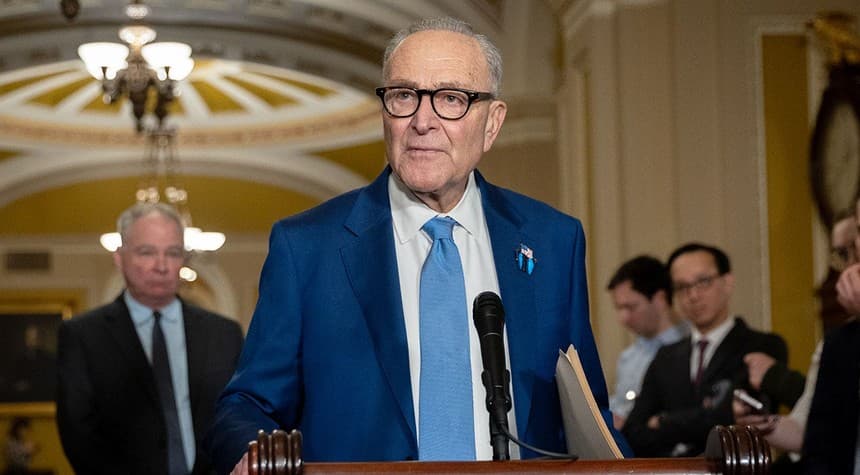
Courage. That word gets thrown around a lot in Washington these days, but it takes a particular kind of political fortitude to stand against the tide of public opinion when 83 percent of Americans are rowing in the opposite direction.
Senate Minority Leader Chuck Schumer made clear this weekend that Democrats will block the Safeguarding American Voter Eligibility Act, known as the SAVE Act, which would require proof of citizenship to register to vote in federal elections. The legislation sailed through the House last week and now awaits its fate in the Senate, where Schumer has promised it will meet a swift end.
"We will not let it pass in the Senate," Schumer declared during a Sunday interview. "We are fighting it tooth and nail."
The New York Democrat characterized the measure as an attack on vulnerable Americans, claiming it would prevent more than 20 million legitimate voters, primarily poorer citizens and people of color, from exercising their constitutional rights. He went so far as to label it "Jim Crow 2.0," invoking the dark chapter of discriminatory voting laws that plagued the South for decades.
Here is where the story gets interesting, and where the facts deserve a closer look.
Recent polling data reveals a striking disconnect between Democratic leadership and the American electorate. Research published last year found that roughly 83 percent of Americans support some form of voter identification requirements. Perhaps even more telling, 71 percent of Democratic voters surveyed backed the idea of presenting identification to vote.
The SAVE Act itself contains straightforward provisions. It would establish a system requiring proof of citizenship to register for federal elections and create mechanisms for state election officials to share information with federal authorities to verify voter rolls. The legislation would also authorize the Department of Homeland Security to pursue immigration cases when noncitizens are discovered on voter registration lists.
Supporters argue these measures simply codify common sense safeguards that most democratic nations around the world already employ. Critics counter that the requirements create unnecessary barriers that disproportionately affect certain demographic groups.
The political calculus here runs deep. Without support from Senate Democrats, and barring a surprise defection from Pennsylvania Senator John Fetterman, who has previously broken ranks on voter identification rhetoric, the bill faces long odds. Republicans would need to either eliminate the Senate's 60-vote filibuster threshold, a move they oppose, or force a talking filibuster that could tie up the chamber for hours or days.
Tennessee Senator Bill Hagerty continues to champion the legislation, emphasizing the importance of election integrity and the need to ensure that only eligible citizens participate in federal elections.
The question that hangs over this debate is not particularly complex. If the overwhelming majority of Americans, including a substantial portion of Democratic voters, support voter identification measures, why does party leadership remain so adamantly opposed?
The answer likely involves competing visions of voting access, differing interpretations of data regarding who possesses various forms of identification, and fundamental disagreements about whether current safeguards adequately protect election integrity.
What remains undeniable is this: the gap between public sentiment and political positioning on this issue represents one of the more striking disconnects in contemporary American politics. Whether that gap narrows or widens may well depend on how effectively either side makes its case to the American people in the months ahead.
Related: Trump Administration Fires Judge-Appointed Federal Prosecutor Within Hours