Senator Kennedy Proposes Reconciliation Strategy to Fund ICE During Government Shutdown
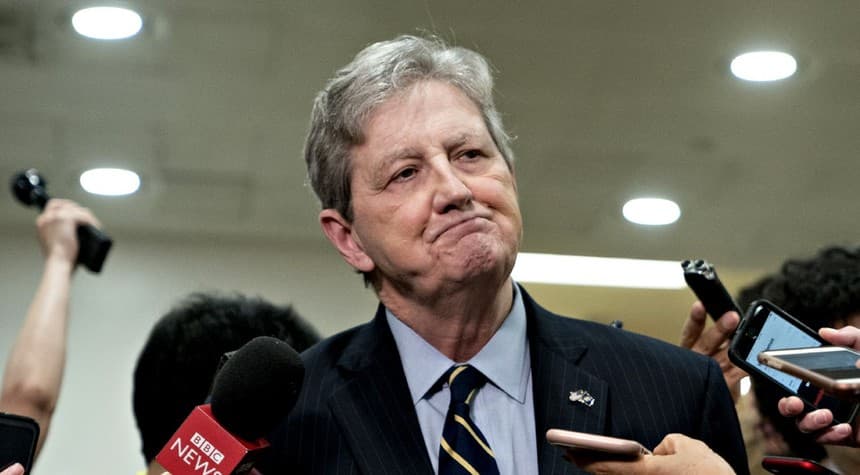
The partial government shutdown has entered a critical phase, and one Southern senator believes he has found a way through the impasse that has left federal workers in limbo and critical security operations hanging in the balance.
Senator John Kennedy of Louisiana laid out a tactical approach Sunday that would accept Democratic demands in the short term while positioning Republicans to achieve their immigration enforcement goals through an alternative legislative path. It is the kind of political chess that often gets lost in the heated rhetoric of Washington standoffs, but it deserves serious consideration.
Kennedy's proposal is straightforward in its mechanics, if not in its political implications. He would accept the Democratic offer to fund government operations while excluding Immigration and Customs Enforcement from the appropriations package. Then, immediately following that agreement, Republicans would move forward with a reconciliation bill to establish ICE funding without requiring a single Democratic vote.
"I would accept the Democrats' offer to open up everything except ICE at DHS. Then, the very next day, I would pass a reconciliation bill which crafts a budget for ICE," Kennedy explained during his Sunday evening interview. "We can do it without any Democratic votes. Certainly the Democrats are welcome to join us. We can do it with all Republican votes. That's how we passed the One Big, Beautiful Bill."
The reconciliation process Kennedy references is a legislative tool that allows certain budget-related measures to pass the Senate with a simple majority, bypassing the typical 60-vote threshold needed to overcome a filibuster. Republicans used this same mechanism to advance their comprehensive legislative package earlier in the session.
This shutdown comes at a particularly precarious moment for national security. Unpaid Department of Homeland Security workers continue reporting to their posts even as concerns mount about their ability to maintain focus amid financial uncertainty. Airport security operations face scrutiny as intelligence reports indicate elevated terror threats, making this more than just another Washington budget battle.
The fundamental disagreement centers on how America enforces its immigration laws. Democrats have pushed for what they characterize as ICE reform, while Republicans maintain that the agency requires full funding to execute its mandate of interior enforcement and removal operations. Kennedy's approach attempts to thread this needle by giving Democrats a symbolic victory while ensuring Republicans can still deliver on immigration enforcement commitments.
Whether this proposal gains traction remains to be seen. The reconciliation path Kennedy outlines is procedurally viable, but it requires unified Republican support and careful navigation of Senate budget rules. Democrats may also recognize the maneuver for what it is and refuse to participate in what amounts to a temporary concession.
What seems clear is that federal workers caught in the middle of this dispute deserve better than continuing uncertainty. Kennedy's proposal at least offers a framework for moving forward, even if the path ahead remains politically treacherous. The question now is whether enough senators on both sides are ready to take it.
Related: Minority Leader Raises Alarm Over Untrained ICE Agents Being Sent to Airports Nationwide