
Reports from Georgia indicate that a complex situation has unfolded involving South Korean workers at a Hyundai-LG battery factory site.
Approximately 475 individuals were arrested in what officials describe as the largest single-site immigration operation since President Trump’s reinstatement of stricter enforcement policies. The majority of those detained were South Korean nationals, prompting a delicate diplomatic effort between the United States and its longtime ally.
Most of the South Korean workers were likely in possession of visas that do not permit hands-on construction work. This discrepancy appears to be at the heart of the matter.
South Korea, the fourth-largest economy in Asia, maintains multiple manufacturing plants in the United States. This incident raises important questions about the future of international investment and the complexities of global workforce mobility.
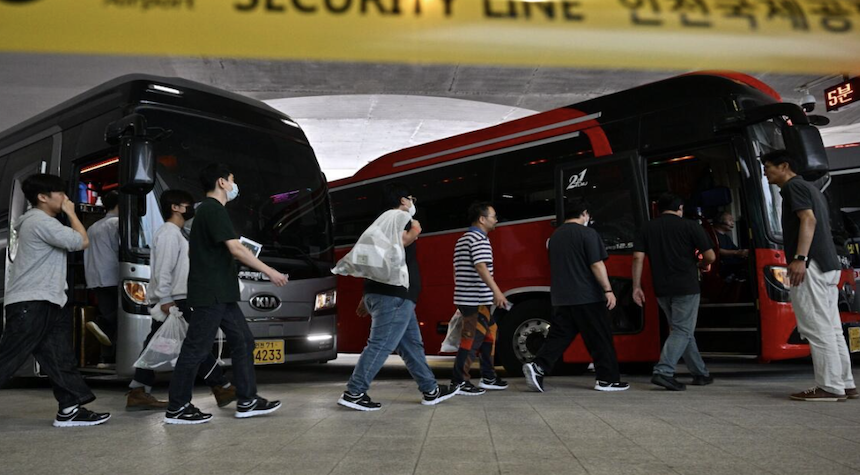
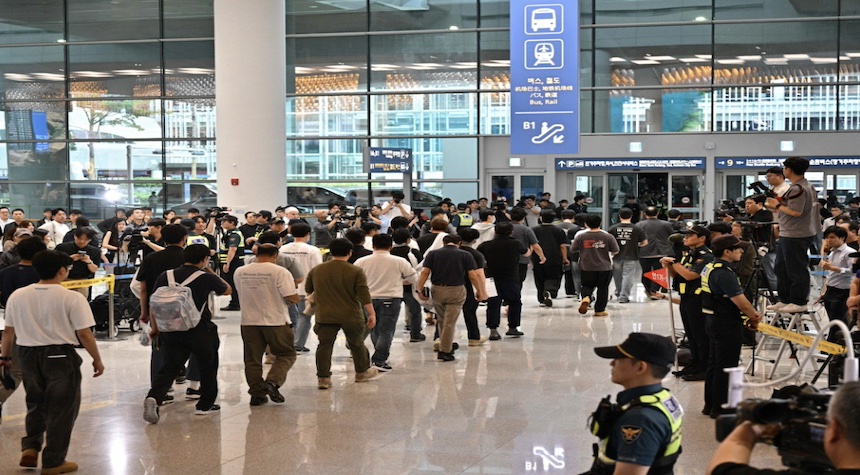
310 South Korean workers have returned home. Their arrival at Incheon airport was met with applause from government officials and emotional reunions with family members. Reports indicate that some of the returned workers described poor living conditions during their detention.
The Trump administration emphasizes the importance of strict immigration enforcement. Conversely, South Korean officials and labor unions have expressed deep concern over the treatment of their nationals and the potential impact on future investments.
Also Consider Reading: White House Signals Trump May Let Controversial DC Order Expire
Hyundai’s Chief Executive Officer has stated that the project will face delays of two to three months due to the labor shortage. LG Energy Solution, while more reserved in its assessment, acknowledges that there will be some impact on its operations.
South Korean companies routinely bring their own workforce for project development. Industry sources indicate that using visa workarounds to avoid delays is a common practice, highlighting the complex interplay between international business and immigration policy.
Questions remain about the long-term implications of this incident on U.S.-South Korea relations and future investment strategies. The situation continues to evolve, and we will provide updates as more information becomes available.