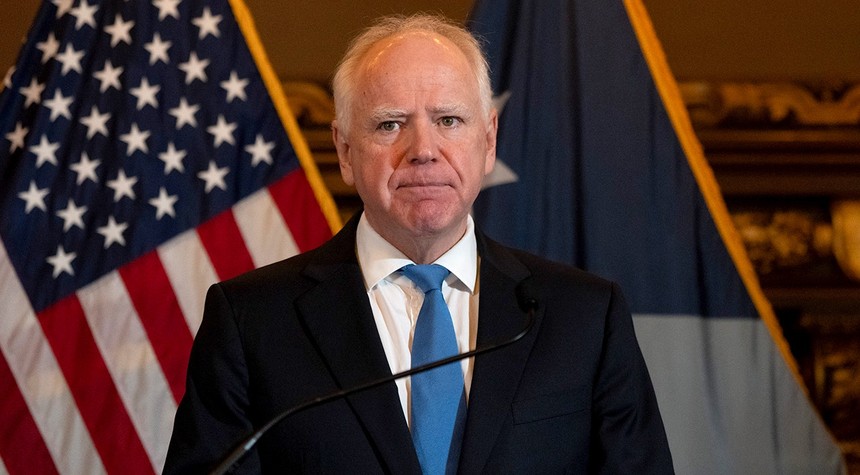
The political temperature in Minnesota just got a whole lot hotter, and Governor Tim Walz is making sure everyone knows exactly where he stands.
In a news conference that raised more than a few eyebrows, the Democratic governor issued what amounts to a bill to the Trump administration, demanding federal compensation for what he characterizes as damage inflicted during immigration enforcement operations in the Twin Cities.
The timing is significant. Walz’s demands came immediately after Border Czar Tom Homan announced the administration would be drawing down Operation Metro Surge, the concentrated immigration enforcement effort that has been active in Minnesota’s largest metropolitan area.
“The federal government needs to pay for what they broke here,” Walz declared, his words carrying the weight of someone preparing for a prolonged political battle. “You don’t get to break things and then just leave without doing something about it.”
The governor went further, painting a picture of lasting harm to Minnesota communities. He spoke of “deep damage” and “generational trauma” left in the wake of federal law enforcement operations, though he provided few specifics about what exactly constitutes this damage or how it might be quantified in dollars and cents.
Walz announced his intention to mobilize Minnesota’s federal congressional delegation to pursue what he calls accountability, focusing particularly on the “incredible and immense costs” he claims were borne by state residents during the enforcement operations.
“There is going to be accountability on the things that happened,” the governor stated, “but one of the things is the incredible and immense costs that were borne by the people of this state. The federal government needs to be responsible.”
The governor indicated he will be “asking the federal delegation to be investing and doing the things necessary,” though he stopped short of specifying an exact dollar amount or detailing precisely what investments he has in mind.
This latest confrontation represents another chapter in the ongoing tension between the Trump administration’s immigration enforcement priorities and Democratic state leaders who have positioned themselves as obstacles to federal operations. The question of whether states can successfully demand federal payment for the execution of federal law enforcement duties is one that legal scholars will likely debate for some time.
What remains clear is that Walz, who recently announced he would not seek reelection, appears determined to use his remaining time in office to challenge the administration’s approach to immigration enforcement. Whether his demands will gain traction with Minnesota’s federal delegation, or whether they represent political theater in the final act of his gubernatorial tenure, remains to be seen.
The Trump administration has not yet responded to Walz’s demands for compensation, and it seems unlikely they will view enforcement of federal immigration law as something requiring restitution to state governments.
For Minnesotans watching this unfold, the question becomes whether their governor is fighting for genuine accountability or simply positioning himself for whatever political chapter comes next.
Related: Trump Administration Fires Judge-Appointed Federal Prosecutor Within Hours