The fight over who interprets Senate rules has reached a boiling point, and President Trump is not mincing words about where he stands on the matter.
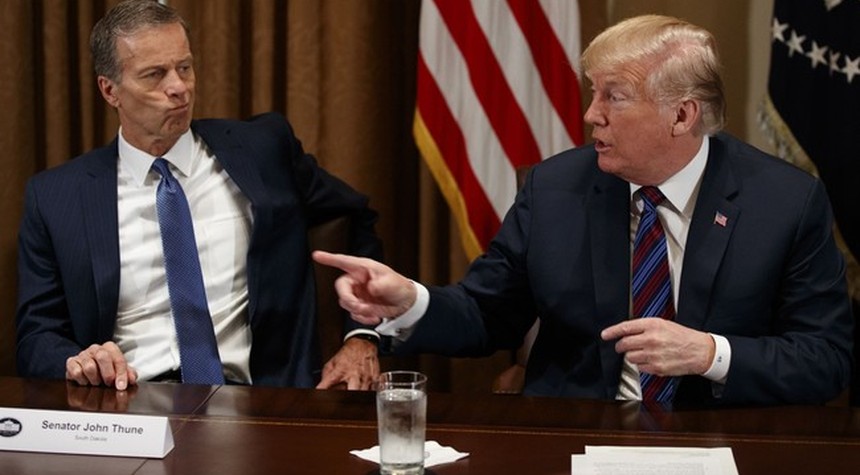
In a direct appeal Monday afternoon, the president called on Senate Majority Leader John Thune to remove Senate Parliamentarian Elizabeth MacDonough from her position, escalating a conflict that has simmered for months over procedural rulings that have stymied Republican priorities.
The president’s frustration centers on what he describes as a pattern of unfair treatment toward Republican initiatives. MacDonough recently ruled against a proposal that would have allocated $1 billion for security enhancements to White House facilities, determining the measure failed to meet procedural requirements for budget reconciliation.
For those unfamiliar with the inner workings of Capitol Hill, the Senate Parliamentarian serves as the chamber’s official advisor on rules and procedures. While the position carries no formal power to block legislation, the parliamentarian’s interpretations of Senate rules carry substantial weight in determining what can proceed under special procedures that avoid filibuster requirements.
The president argues that MacDonough, appointed during the Obama administration when Harry Reid controlled the Senate, has consistently favored Democratic positions while creating obstacles for Republican legislation. He characterizes her as a “holdover” from the Mitch McConnell era, suggesting the former majority leader’s willingness to work across the aisle came at the expense of conservative priorities.
This marks the first time Trump has directed his case specifically to Thune, though it is not his first call for MacDonough’s removal. In May, the president questioned why Republicans had maintained someone in such a critical position who he believes works against their interests.
Thune’s response has been measured, if somewhat noncommittal. When asked about the president’s demands, the majority leader indicated he had not yet read the full statement and needed time to review it. He acknowledged concern about anyone being targeted but characterized the president’s words as opinion.
The tension highlights a broader question about how Republicans should approach institutional positions in Washington. Some argue that maintaining nonpartisan professionals in key roles demonstrates commitment to institutional integrity. Others contend that when those positions consistently produce outcomes favoring one party, change becomes necessary.
The practical implications extend beyond this single dispute. The president warned that without a change in the parliamentarian’s office, the SAVE America Act and other Republican priorities face uncertain futures in the Senate’s complex procedural landscape.
Whether Thune will act on the president’s demand remains unclear. The majority leader faces the delicate task of balancing institutional tradition with the expectations of a president who won a mandate for change. Senate Republicans must decide whether precedent or results matter more in this moment.
What seems certain is that the debate over Senate procedures and who interprets them will continue to shape what the Republican majority can accomplish. The parliamentarian’s rulings may lack formal binding authority, but their practical effect on the legislative agenda proves considerable.
As Washington watches this confrontation unfold, the question becomes not just about one position or one person, but about how much deference elected officials should grant to unelected advisors when those interpretations consistently obstruct the agenda voters endorsed.
Related: Razor-Thin Margins Keep California Voters Waiting for Primary Results