
The winds of change are blowing through the intelligence community, and they are blowing hard.
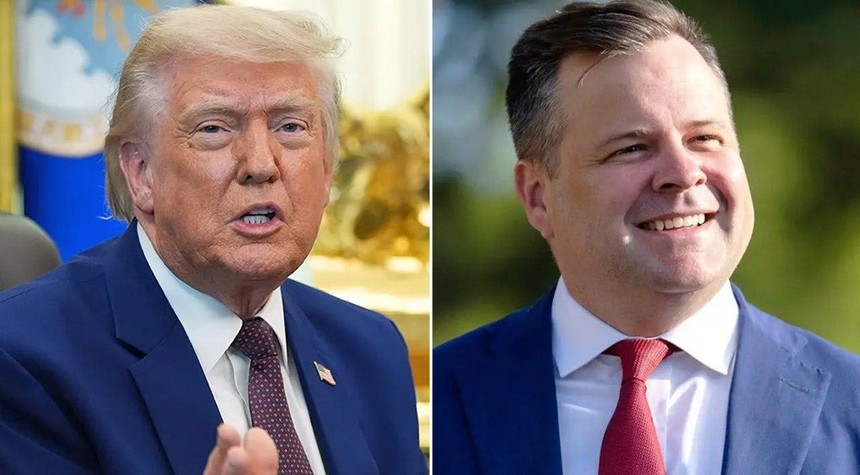
President Donald Trump made clear this week that he expects his incoming Acting Director of National Intelligence to take a hard look at personnel across America’s sprawling intelligence apparatus. In an interview published Friday, the president did not mince words about his intentions for the 18 agencies that fall under the DNI’s purview.
“I’d like to see it smaller,” Trump stated plainly. “I think there are a lot of people in there that shouldn’t be there.”
The man tasked with this considerable undertaking is Bill Pulte, currently serving as Director of the Federal Housing Finance Agency. Trump announced Tuesday that Pulte would step into the acting DNI role, taking the reins from Tulsi Gabbard when her resignation becomes official on June 30.
Gabbard’s departure from the position comes under deeply personal circumstances. The former congresswoman and military veteran resigned in May following her husband’s diagnosis with a rare form of cancer, a reminder that even those who serve at the highest levels of government face the same trials that touch American families everywhere.
Now Pulte finds himself at the center of what appears to be a significant restructuring effort. The president’s directive is straightforward: start the process of reducing the workforce within the intelligence community. It is a mandate that speaks to long-standing concerns about bureaucratic bloat and accountability within agencies that operate largely outside public view.
The intelligence community has grown considerably over the decades, particularly in the years following the September 11 attacks. What began as necessary expansion in response to genuine threats has, in the eyes of many observers, evolved into something less efficient and more unwieldy than circumstances demand.
The question facing Pulte is not whether to act, but how to execute such a directive effectively. Reducing personnel in sensitive intelligence positions requires careful consideration. These are not simply bureaucratic positions being eliminated. These are roles that touch national security, counterintelligence, and the protection of American interests abroad.
Critics will undoubtedly raise concerns about any downsizing of intelligence capabilities. They will point to ongoing threats from adversaries both foreign and domestic. They will argue that America cannot afford to reduce its intelligence footprint in an increasingly complex global landscape.
Yet the president’s position reflects a different calculation. It suggests a belief that effectiveness and efficiency are not mutually exclusive, that a leaner intelligence community might actually serve the nation better than one weighed down by excess personnel and redundant operations.
The truth, as it often does, likely lies somewhere in the nuanced space between these positions. Not every intelligence employee is essential to national security, but neither is wholesale reduction without careful assessment a prudent path forward.
Pulte will assume his new role at a critical juncture. How he navigates these competing demands, how he balances the president’s clear directive with the practical realities of maintaining effective intelligence operations, will define his tenure and potentially reshape the intelligence community for years to come.
The American people deserve an intelligence apparatus that is both effective and accountable. Whether this restructuring achieves that balance remains to be seen.
Related: GOP Immigration Funding Bill Advances as SAVE Act Amendment Fails Again