Trump Says United States No Longer Dependent on Middle Eastern Oil Imports
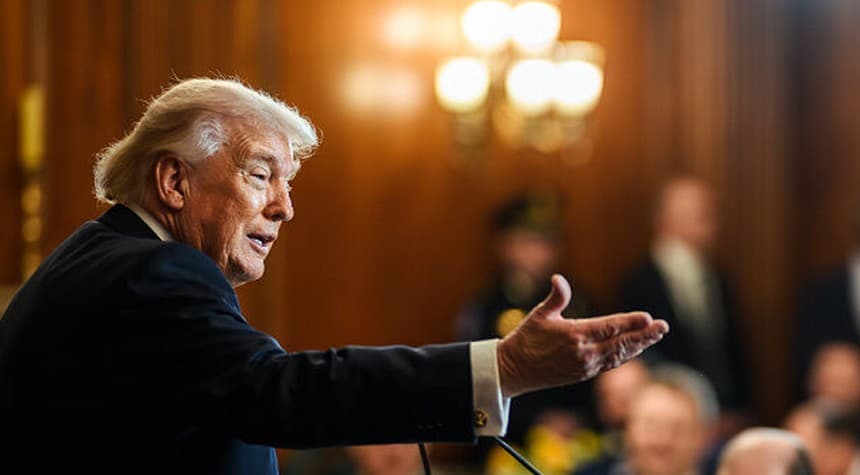
Courage. It is a word we do not hear often enough from our leaders these days, yet President Trump used it Wednesday night in a way that cut straight to the heart of America's energy independence and our changing role in global affairs.
Speaking to the nation about the ongoing Iran situation, the president laid out what can only be described as a fundamental shift in how America views its energy security and its obligations abroad. The facts he presented deserve our attention.
According to the president, the United States now produces more oil and gas than Saudi Arabia and Russia combined. Let that sink in for a moment. The two nations that have dominated global energy markets for generations now trail behind American production. This is not speculation or campaign rhetoric. This represents a measurable transformation in the global energy landscape.
"Because of our 'Drill Baby Drill' program, America has plenty of gas," Trump stated plainly. He went further, noting that even without counting the millions of barrels coming from Venezuela, the United States stands as the number one producer of oil and gas on the planet.
The implications of this shift became clear as the president addressed the Strait of Hormuz, that narrow waterway through which so much of the world's oil has traditionally flowed. Trump made an important distinction: the United States imports almost no oil through that strait and will not be taking any in the future.
"We don't need it. We haven't needed it," the president said with characteristic directness.
This is where the conversation turned interesting, and where Trump's message to our allies became pointed. The countries that do depend on oil flowing through the Hormuz Strait, he argued, must take responsibility for protecting that passage themselves. They should take the lead in securing the oil upon which they so desperately depend.
To nations struggling with fuel access, many of which declined to participate in operations against Iran, Trump offered two suggestions. First, buy oil from the United States. We have plenty. Second, and here is where that word courage appeared again, build up some delayed courage and secure the strait themselves.
The president characterized Iran as decimated, both militarily and economically, suggesting that the difficult work has been completed. Once this conflict concludes, he predicted, the strait will naturally reopen as Iran seeks to sell oil to rebuild. Gas prices will then rapidly decline.
Regarding the recent rise in gas prices Americans have experienced, Trump placed responsibility squarely on the Iranian regime, citing what he called deranged terror attacks against commercial oil tankers in neighboring countries uninvolved in the conflict. These attacks, he asserted, prove that Iran can never be trusted with nuclear weapons.
The larger picture emerging from this address reveals an America no longer beholden to Middle Eastern oil, no longer willing to shoulder the burden of protecting shipping lanes for nations that refuse to defend their own interests. Whether one agrees with this approach or not, it represents a significant departure from decades of American foreign policy.
The numbers tell part of the story. The policy shift tells another. How this plays out in the weeks and months ahead may well define America's role in global energy markets for a generation.
Related: White House Calls for Fast-Track Funding to Bypass Democratic Opposition