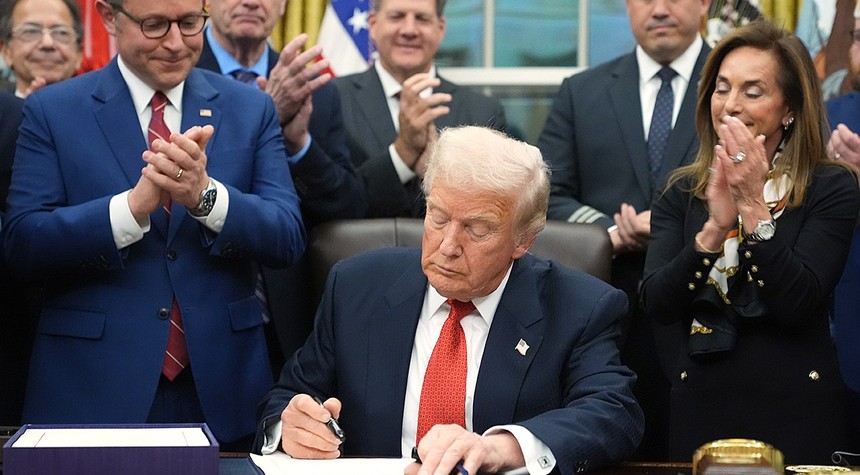
Courage, as they say, is often measured by one’s willingness to challenge the conventional wisdom of the day. President Donald Trump demonstrated that principle Thursday when he put pen to paper on an executive order that fundamentally reshapes how the federal government views marijuana.
The order reclassifies cannabis from a Schedule I controlled substance to Schedule III, a move that carries significant implications for research, commerce, and the broader national conversation about drug policy. This is not small potatoes, folks. This represents a seismic shift in federal drug enforcement policy that has remained largely unchanged for decades.
Under the previous classification, marijuana sat alongside heroin, ecstasy, and LSD in the government’s most restrictive category. The Drug Enforcement Administration had long maintained that Schedule I substances possessed no accepted medical use and carried a high potential for abuse. That designation made conducting legitimate scientific research extraordinarily difficult, if not impossible in many cases.
The new Schedule III classification places marijuana in the same regulatory framework as drugs like certain painkillers and anabolic steroids, substances the DEA considers to have moderate to low potential for physical and psychological dependence. The practical effects of this change will ripple through multiple sectors.
“This reclassification order will make it far easier to conduct marijuana-related medical research, allowing us to study benefits, potential dangers, and future treatments,” Trump stated from the Oval Office Thursday. “It’s going to have a tremendously positive impact.”
The president had telegraphed this move earlier in the week, telling reporters that reclassification would unlock tremendous research opportunities currently blocked by federal restrictions. The cannabis industry, which has operated in a legal gray zone for years, stands to benefit substantially from reduced regulatory barriers.
However, this decision has not sailed through without turbulence. Some members of Trump’s own party have raised red flags about the policy shift. Representative Pete Sessions of Texas and House Freedom Caucus Chairman Andy Harris of Maryland led a contingent of lawmakers who sent correspondence to the White House urging the president to maintain marijuana’s Schedule I status.
Their concerns center on two primary issues. First, these lawmakers argue that reclassification sends the wrong message to young Americans about marijuana’s potential dangers. Second, they express worries about road safety and impaired driving.
“We write to urge you to oppose rescheduling marijuana, a harmful drug that is worsening our nation’s addiction crisis,” the lawmakers wrote in their letter to Trump.
This internal Republican disagreement underscores the complexity of drug policy reform in modern America. The issue cuts across traditional political lines, with advocates and opponents found in both parties. Public opinion has shifted dramatically over the past two decades, with a majority of Americans now supporting some form of marijuana legalization.
The truth, as it often does, likely resides somewhere between the competing narratives. Marijuana is neither the harmless substance some advocates claim nor the dangerous gateway drug others portray. What remains clear is that the previous classification made conducting serious scientific research nearly impossible, leaving policymakers to debate the issue without adequate data.
Trump’s executive order changes that dynamic. Whether this proves to be sound policy will depend largely on how researchers, regulators, and law enforcement adapt to the new framework. The coming months will tell us much about whether this gamble pays dividends or creates unforeseen complications.
Related: Federal Authorities Disrupt Terror Plot Targeting ICE Agents in California