Courage in politics sometimes means crossing party lines when the stakes are high enough. This week, the House of Representatives is set to consider legislation that would shine a much-needed light on the shadowy labyrinth of federal criminal laws and regulations that have accumulated like dust in an abandoned attic over decades of bureaucratic expansion.
The bill, which would mandate creation of a comprehensive database cataloging existing federal criminal statutes and regulations, represents an unlikely but welcome partnership between conservative firebrands and progressive lawmakers who have found common ground on a fundamental question: How can Americans be expected to follow laws they cannot even identify?
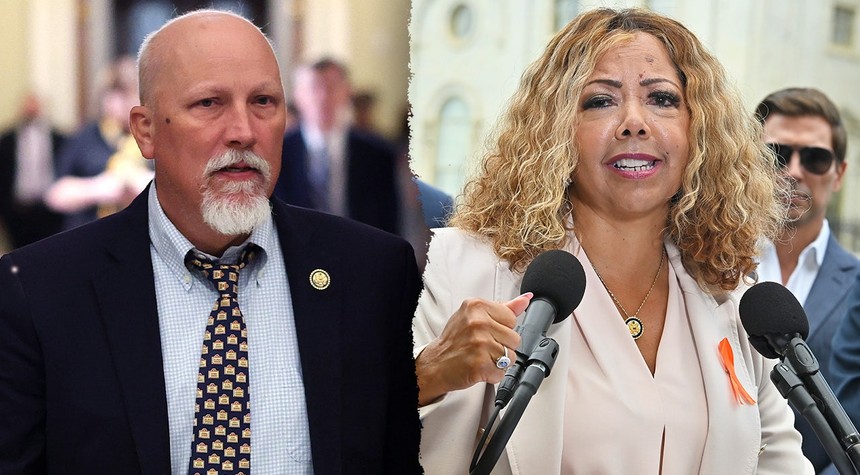
Leading the charge is Representative Chip Roy of Texas, joined by fellow Republican Andy Biggs of Arizona and Democrats Lucy McBath of Georgia and Steve Cohen of Tennessee. It is not every day that members of the House Freedom Caucus find themselves walking in lockstep with progressive colleagues, but government overreach has a peculiar way of forging unexpected alliances.
“This, for me, was driven by the fact that I think we have far too many federal crimes and that the American people often don’t know what they are,” Roy explained. “There’s lots of different ways in which you can be criminally liable for something you don’t even know about, and that’s insane.”
The Texas Republican makes a fair point worth considering. While certain offenses like assault, theft, and other violations of basic moral law rightfully carry criminal penalties, the federal code has metastasized into something far more complex and potentially dangerous to ordinary citizens going about their daily business.
Consider the farmer working land his family has tended for generations, suddenly finding himself facing criminal prosecution for violating an Environmental Protection Agency regulation he never knew existed. Or the small business owner who runs afoul of an obscure federal statute buried deep within thousands of pages of regulatory text. These are not hypothetical scenarios but real situations that have ensnared Americans who had no criminal intent whatsoever.
“There are all sorts of regulatory things under the EPA that frankly make criminals out of Americans by virtue of just how they engage,” Roy noted. “It might be a farmer just using their land or range or whatever. And suddenly they are a criminal.”
The proliferation of federal criminal statutes extending from broad regulatory frameworks has created a situation where Americans can become lawbreakers without ever knowing they crossed a line. When a generic environmental protection statute spawns a thousand different codes, each carrying potential criminal liability, something has gone fundamentally wrong with our system of justice.
Representative Biggs emphasized this concern in pointing out the lack of proper accounting for regulatory offenses. “We have a duty to protect Americans’ right to liberty, and this begins with scaling down the massive overreach in federal criminal offenses,” he stated.
The database itself may seem like a modest first step, but supporters view it as essential groundwork for eventual reform of an unwieldy system. You cannot fix what you cannot see, and right now, the full scope of federal criminal liability remains obscured even from legal experts, let alone average citizens.
Representative McBath argued that the legislation addresses a basic fairness issue, noting that Americans should not have to live in fear of unknowingly violating obscure regulations.
Whether this bipartisan effort gains traction remains to be seen, but it represents the kind of principled cooperation that ought to happen more often when fundamental liberties are at stake. The question before Congress is straightforward: Should Americans be held criminally liable for laws they cannot reasonably be expected to know exist? Common sense suggests the answer should be no.
Related: Republican Lawmakers Consider Ending Filibuster to Advance America First Platform