The wheels of justice sometimes turn in unexpected directions, and what we are witnessing now at the Justice Department represents one of those curious moments when a law written for one purpose finds new application in defending entirely different freedoms.
Assistant Attorney General Harmeet Dhillon stood before an audience at George Washington University this week and laid out a legal strategy that deserves our careful attention. The Justice Department, she explained, has begun wielding the Freedom of Access to Clinic Entrances Act in a manner its original authors likely never envisioned.
The FACE Act, passed decades ago to shield abortion clinics from blockades and violent protests, now serves as the federal government’s tool for protecting synagogues and churches from disruption. This is not merely creative lawyering. This represents a fundamental shift in how federal civil rights enforcement approaches religious liberty.
“It was our pioneering application of the FACE Act to defend Jewish synagogues that paved the way for its use to defend churches,” Dhillon stated during her remarks at the antisemitism and extremism conference. Her words carry weight, coming as they do from the woman who leads the Civil Rights Division.
The statute itself makes it a federal offense to use force, threats, or physical obstruction to intentionally interfere with individuals exercising their right to religious worship. That language, Dhillon argues, provides federal authorities the legal foundation to step in when protests cross the line from protected speech into unlawful conduct.
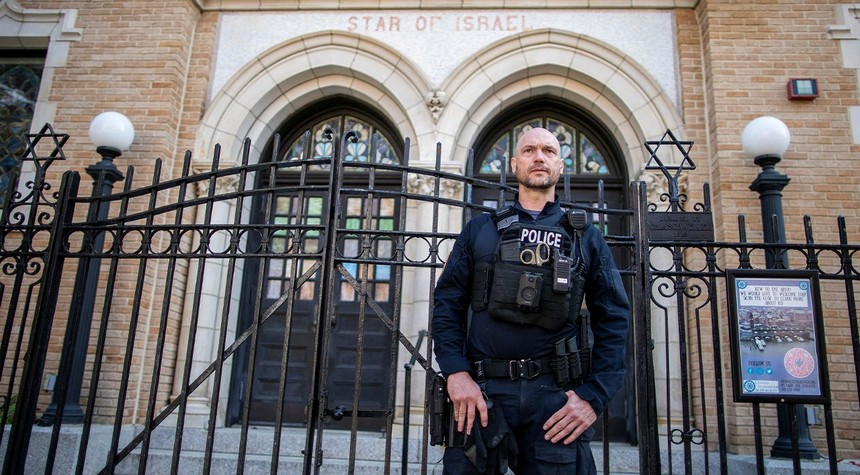
The department has already put this strategy into action. Federal prosecutors filed a civil lawsuit against protesters accused of disrupting services at a synagogue in West Orange, New Jersey. Dhillon described this case as the first of its kind, a test balloon that apparently flew well enough to encourage broader application.
Now comes word that the Justice Department is reviewing similar incidents at other houses of worship across the country. Dhillon made clear that additional enforcement actions are being considered, a signal that this represents policy rather than isolated prosecution.
The implications stretch beyond any single case. What we are seeing is the Justice Department drawing what Dhillon calls “clear legal lines” between constitutionally protected speech and criminal interference with religious practice. That line has grown increasingly blurred in recent years as protests have intensified around various causes.
Federal agents have already made arrests in connection with a church storming incident in Minnesota, suggesting the enforcement approach extends beyond civil lawsuits into criminal territory.
This development raises questions that honest observers, regardless of political persuasion, must grapple with. Does expanding a law beyond its original intent serve justice, or does it risk overreach? Can federal authorities consistently distinguish between vigorous protest and unlawful obstruction? And perhaps most fundamentally, does this enforcement strategy adequately protect religious liberty without chilling legitimate dissent?
The answers will emerge not in conference halls but in courtrooms, where judges will weigh the government’s novel application of this statute against constitutional protections for both religious practice and free expression.
What remains beyond dispute is that houses of worship, whether synagogue, church, or mosque, deserve protection from those who would silence prayer with disruption. How federal law achieves that protection, and at what cost to other liberties, will define this legal experiment’s ultimate success or failure.
The Justice Department has made its move. Now we watch to see how it plays out.
Related: Sanctuary City Economics Collapse as Trump Reinstates Federal Labor Law Enforcement