Sanctuary City Economics Collapse as Trump Reinstates Federal Labor Law Enforcement
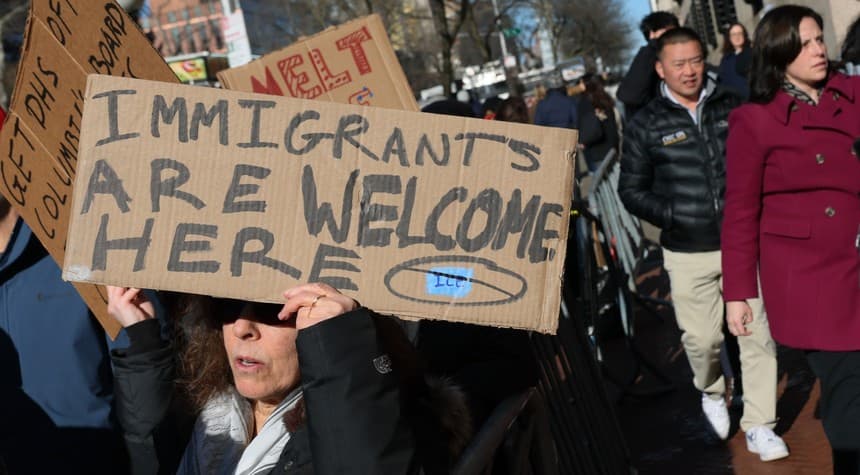
The chickens are coming home to roost in America's sanctuary cities, and Democratic leaders are crying foul as their economic house of cards begins to tumble.
Treasurers from sixteen states have penned an urgent letter to President Trump, protesting what they call an unfair burden placed upon their jurisdictions. "We are now expected to absorb the fiscal consequences of enforcement activities," they wrote. "This is not acceptable."
Let us be clear about what is happening here. These Democratic state officials, from Massachusetts to Minnesota, from New York to Illinois, are asking the federal government to exempt them from enforcing national laws designed to protect Americans' civil rights, labor standards, housing regulations, and anti-fraud statutes. They want special treatment, a carve-out from the rules that govern the rest of the nation.
"We urge your administration to immediately scale back enforcement activities causing this harm and to ensure the economic stability our communities require," the treasurers pleaded.
The sudden reapplication of federal law has sent shockwaves through the so-called sanctuary economy. Bill Glahn at the Center of the American Experiment in Minnesota explained the predicament with remarkable clarity. These jurisdictions created an entire economic model dependent on federal dollars flowing to fraudulent recipients and a workforce operating outside legal parameters. When that spigot gets turned off and enforcement returns, the entire structure collapses.
The sanctuary city model operates on a simple premise. Local governments, investors, and corporate executives generate revenue by maintaining an economy fueled by illegal migrant workers, consumers, and renters. These workers receive wages far below market rates, though still better than what they earned in their home countries. State governments supplement this arrangement with benefits including education and healthcare.
It is an arrangement that benefits certain parties while American citizens in these communities lose their fundamental civil right to compete on a level playing field for decent wages and affordable housing.
Meanwhile, President Trump is charting a different course entirely. His vision centers on trade, innovation, and productivity rather than cheap labor extraction. In August, he outlined an economy that embraces automation and efficiency. "We're going to need robots to make our economy run because we do not have enough people," he explained. The strategy involves streamlining operations and boosting productivity through technological advancement. Someone will need to manufacture those robots, creating a cycle of innovation and employment.
This represents a fundamental divergence from the Democratic economic playbook, which has relied heavily on what analysts call extraction migration. That model depends on a constant flow of low-wage workers who can be paid less than American citizens while generating economic activity through consumption and rent payments.
The question now facing these sixteen states is straightforward. Should American jurisdictions receive federal exemptions from enforcing laws that protect workers and prevent fraud? Should they be permitted to maintain economic systems that discriminate against American citizens in their own communities?
The Trump administration appears to have delivered its answer through action rather than words. Federal law will be enforced. National standards will apply. And local governments that built their budgets on a foundation of non-compliance will need to adjust accordingly.
The economic pain being felt in sanctuary cities is real, but it stems from a choice those jurisdictions made to operate outside the legal framework governing the rest of America. Now that framework is being restored, and the consequences are becoming apparent.
Related: Judge Rules California Cannot Unmask ICE Agents Amid Threats and Violence