
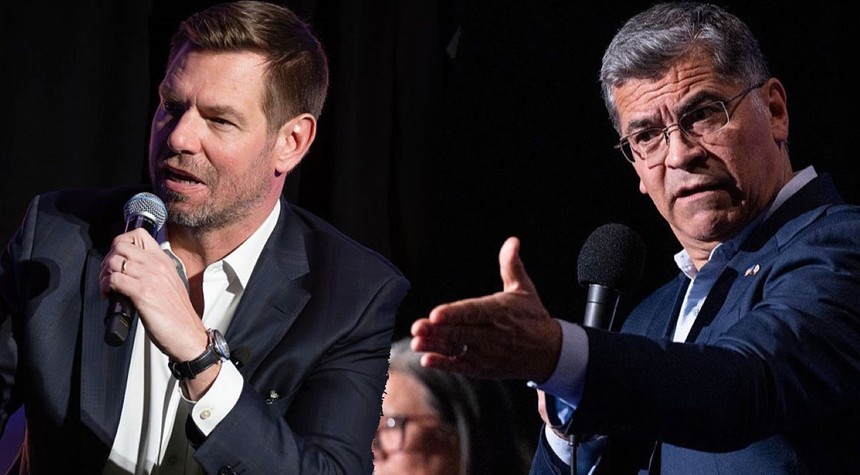
The questions came hard and fast during Wednesday night’s California gubernatorial debate, and Xavier Becerra found himself in the hot seat over what he knew and when he knew it regarding Eric Swalwell’s alleged misconduct.
This is the kind of moment that separates those who lead from those who simply hold office. Becerra, who served as Health and Human Services secretary in the Biden administration, was pressed on his previous statement that “many of us heard the rumors” about Swalwell during their time serving together in Washington.
The former Democratic Caucus chair faced a direct question from debate moderator Nikki Laurenzo that cut straight to the heart of the matter. What exactly did he hear, and more importantly, what did he do about it?
Becerra’s response followed a familiar pattern we have seen too often in Washington. “You hear rumors all the time about all sorts of things. Rumors are not facts,” he said, adding that the Democratic caucus “is not a place that adjudicates those things.”
That answer raises more questions than it settles. If Democratic leadership heard rumors about one of their own, did they have a responsibility to look deeper? The American people have a right to expect more than a shrug and a reference to jurisdictional boundaries when serious allegations surface.
The timing of this debate question could not be more significant. Swalwell, who dropped out of the gubernatorial race and resigned from Congress amid the scandal, now faces a fresh ethics complaint from the Foundation for Accountability and Civic Trust. The conservative watchdog group is calling on the Justice Department’s Office of Congressional Conduct to investigate whether Swalwell used his congressional position to promote a private business venture.
The allegations center on Findraiser, an artificial intelligence political fundraising tool that Swalwell allegedly pitched personally to Democratic lawmakers, staff, and campaigns while serving in Congress. His chief of staff was reportedly involved in the business as well.
Multiple women have come forward in recent weeks with allegations of sexual misconduct against Swalwell. While he has denied these allegations, he has acknowledged making poor choices in his personal relationships with women in the past.
The situation presents a troubling picture of accountability, or the lack thereof, within Democratic leadership circles. When rumors circulate about serious misconduct, the response cannot simply be to wait for someone else to investigate. Leadership means taking responsibility for maintaining ethical standards within your own ranks.
Becerra’s defense that the caucus does not adjudicate such matters misses a fundamental point. While formal investigations belong with law enforcement and ethics committees, leaders have an obligation to create an environment where concerns can be raised and addressed promptly.
The California gubernatorial race has now become entangled with questions about institutional accountability that extend far beyond state borders. Voters in the Golden State deserve answers about whether their potential governor took appropriate action when confronted with troubling information about a colleague.
As this story continues to develop, one thing remains clear. The standard for leadership must be higher than simply saying you heard rumors but did nothing because it was not your job to act. That is not leadership. That is looking the other way.
Related: Governor Abbott Threatens to Withhold Over $200 Million From Texas Cities Over Sanctuary Policies