FEMA Enters Financial Crisis Mode as Hurricane Season Approaches
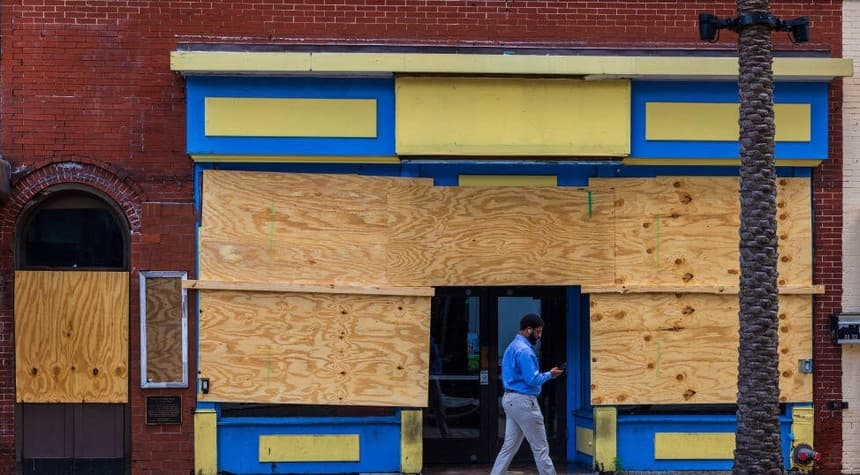
The calendar does not care about Washington's dysfunction, and neither do hurricanes.
With storm season bearing down and the federal government still locked in a partial shutdown, the Federal Emergency Management Agency has crossed into what officials call the danger zone. The agency's Disaster Relief Fund has dropped below $3 billion, triggering what is known as Immediate Needs Funding, a financial triage mode that forces FEMA to ration every dollar for only the most critical, life-saving operations.
The timing raises serious questions about preparedness and priorities in our nation's capital.
"Disasters are unpredictable. They're very costly. We don't know what could happen between now and June 1," FEMA Associate Administrator Victoria Barton stated plainly. That date marks the official start of hurricane season, a period when the agency typically needs every resource at its disposal.
FEMA has not shut its doors entirely, but the agency must now operate under severe constraints. Immediate emergency response, direct aid to disaster survivors, and critical infrastructure protection remain funded. Everything else gets pushed to the back of the line. That means reimbursements to communities still recovering from past disasters and longer-term recovery projects now face indefinite delays.
The financial squeeze affects more than just check-writing. Roughly 10,000 FEMA staff members, including permanent employees and disaster-response personnel hired under the Stafford Act, draw their paychecks from the Disaster Relief Fund. Even during a government shutdown, these essential workers must be paid. Those payroll costs alone consume between $300 million and $400 million monthly, representing one of the largest continuous drains on the fund.
Even before formally entering crisis mode, FEMA had begun tapping the brakes on certain payments. Reimbursements tied to previous disasters, including billions in outstanding pandemic-related aid, were increasingly handled on a case-by-case basis rather than processed at normal speed.
"A lot of those reimbursements are for rural hospitals, but now that we're in immediate needs funding, those payments are going to be paused," Barton explained.
The historical record provides little comfort. FEMA has entered Immediate Needs Funding nine times over the past two decades, but never during an active government funding lapse. Officials acknowledge this situation is unprecedented, creating new uncertainty about how long disaster operations can be sustained under these dual pressures.
The mathematics of disaster response are sobering. Major hurricanes routinely inflict tens or hundreds of billions of dollars in damage. Hurricane Katrina caused approximately $160 billion in destruction. Hurricane Harvey tallied roughly $125 billion. While FEMA does not cover all those expenses, the agency plays an essential role in helping communities rebuild.
Under federal law, FEMA typically reimburses at least 75 percent of eligible disaster costs for state and local governments, covering everything from debris removal to infrastructure repair. When that reimbursement pipeline slows or stops, recovery efforts stall.
The risk escalates if the fund continues to decline. In an extreme scenario, a fully depleted disaster fund could halt not only recovery payments but also affect the staffing funded through the account. If multiple disasters strike simultaneously, or if a major hurricane makes landfall, the entire system could buckle under the strain.
"The potential response efforts could be wiped out if there's no disaster relief funding," Barton warned.
The American people deserve better than a disaster response agency operating on financial fumes as hurricane season approaches. Natural disasters do not wait for political gridlock to resolve itself, and neither should our preparedness for them.
Related: House Republicans Face Pressure to Fund Secret Service After Latest Trump Threat