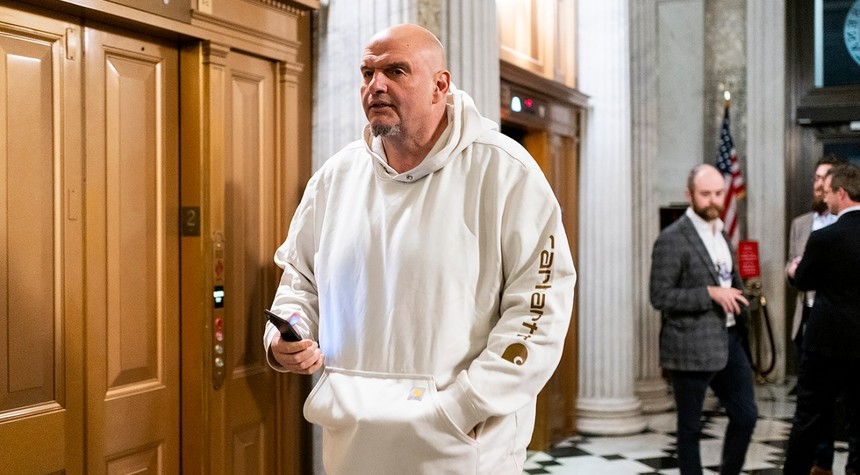
Courage comes in many forms on Capitol Hill, and this week it arrived from an unexpected quarter. Senator John Fetterman of Pennsylvania, a Democrat who has shown an increasing willingness to chart his own course, stepped forward Thursday to condemn what he called “dangerous rhetoric” from President Trump.
The controversy centers on six Democratic lawmakers with military or intelligence backgrounds who addressed service members directly in a video message. Senators Elissa Slotkin of Michigan and Mark Kelly of Arizona, along with Representatives Chris Deluzio of Pennsylvania, Maggie Goodlander of New Hampshire, Chrissy Houlahan of Pennsylvania, and Jason Crow of Colorado told troops in plain language that they possess the legal right to refuse illegal orders.
“Our laws are clear. You can refuse illegal orders,” the lawmakers stated in their Tuesday message.
The president responded with characteristic force, calling their statements seditious behavior from traitors and suggesting imprisonment or even execution as appropriate consequences. White House press secretary Karoline Leavitt later attempted to clarify that the administration seeks accountability rather than capital punishment, though the initial message had already reverberated across Washington.
“To suggest and encourage active-duty service members defy the chain of command is a very dangerous thing for sitting members of Congress to do,” Leavitt explained, adding that the lawmakers “should be held accountable.”
The context matters here, and it matters considerably. The administration has deployed National Guard troops to major American cities including Los Angeles, Washington, and Chicago, citing crime emergencies as justification. These deployments have raised serious questions about the Posse Comitatus Act of 1878, which established clear boundaries preventing the military from conducting civilian law enforcement except in cases of internal rebellion or external attack.
On Thursday, a federal judge delivered a significant rebuke to the administration, ordering an end to National Guard deployments in the nation’s capital. The court found the administration exceeded its authority and violated federal law.
This brings us to the heart of the matter. The six Democratic lawmakers who issued that video message were not encouraging insurrection or undermining military discipline. They were reminding service members of a fundamental principle that emerged from the darkest chapters of the twentieth century: following orders does not absolve individuals of responsibility for illegal actions.
Fetterman recognized the danger in the president’s words, stating unequivocally that threatening members of Congress, whether Republican or Democrat, remains “deeply wrong with no exceptions—ever.”
The Pennsylvania senator’s willingness to defend his colleagues against such threats, regardless of whether he agrees with their tactical approach, demonstrates a commitment to institutional norms that transcends partisan advantage. In an era when such independence has become increasingly rare, his stance deserves recognition.
The question now facing Washington is whether other voices will join Fetterman in drawing a bright line around acceptable political discourse, or whether the temperature will continue to rise. History suggests that when presidents begin labeling opposition as sedition and treason, the republic itself enters troubled waters.
The military officers and enlisted personnel watching this unfold understand something crucial: their oath is to the Constitution, not to any individual. The lawmakers in that video were simply reminding them of that fact.
Related: American Citizen Freed From Saudi Arabia After Four Years Following Trump Diplomatic Efforts